
Unlawful Possession of a Weapon Charges in Illinois
Defense for people charged with unlawful possession of a weapon, aggravated unlawful possession, and unlawful possession of a weapon by a felon in Cook County and across Illinois. These cases are won on the stop, the search, and the question of who possessed the gun.
How a weapons possession case begins
Most weapons possession cases in Illinois begin with a traffic stop. An officer stops a car, searches it, and finds a gun under a seat or in a bag. Often everyone in the car is taken in, and the person charged may not be the person who put the gun there. The charge depends on where the gun was, whether it was loaded, whether the person held a FOID card or a concealed carry license, and whether they have a prior felony.
Bedi & Singer defends people charged with weapons offenses at the Leighton Criminal Court Building at 26th and California, in Cook County’s suburban courthouses, in the collar counties, and in courts across Illinois.
From a client
“Aside from being highly-skilled attorneys, they are generous and communicative. I would strongly recommend working with them.”
Unlawful possession, aggravated unlawful possession, and possession by a felon
Illinois charges carrying a firearm in three tiers. Unlawful possession of a weapon, still known as UUW from its former name, unlawful use of a weapon, is carrying a firearm in a vehicle, concealed on the person, or openly on a public street in a city or village, outside the person’s home, land, or business, or a home where they are an invited guest (720 ILCS 5/24-1). On a first offense it is a Class A misdemeanor, or a Class 3 felony at a school, park, courthouse, or public housing, on public transportation, or on a public way within 1,000 feet of any of those places or a transit station. A machine gun, a sawed-off shotgun, or a silencer is a felony under the same section, and a loaded machine gun in a car’s passenger compartment or on the person is a Class X felony, 6 to 30 years, with no probation.
Aggravated unlawful possession of a weapon, AUUW, is the same carrying plus one factor, among them: a handgun uncased, loaded, and within reach without a concealed carry license, or any other firearm uncased, loaded, and within reach; no FOID card; a handgun in the hands of a person under 21; or an order of protection issued against the person within the previous two years (720 ILCS 5/24-1.6). It is a Class 4 felony, 1 to 3 years. An uncased, loaded, accessible gun combined with no FOID card makes prison mandatory on conviction for a first offense by a person 18 or older, and a prior felony raises the charge to a Class 2 felony, 3 to 7 years, with no probation.
Unlawful possession of a weapon by a felon reaches any firearm or ammunition a person with a prior felony conviction possesses (720 ILCS 5/24-1.1). It is a Class 3 felony, 2 to 10 years, with no probation. A second violation, a prior forcible felony, weapons felony, stalking conviction, or Class 2 or greater drug felony, or parole or mandatory supervised release at the time, makes it a Class 2 felony, 3 to 14 years, and a machine gun makes it Class X.
The FOID card, the concealed carry license, and the lawful ways to carry
Illinois generally requires a FOID card to possess a firearm or ammunition, and a concealed carry license to carry a loaded handgun in public or in a car. A person who carried within that license has not committed UUW, the loaded-handgun factor of AUUW does not apply to them, and neither charge reaches a gun that is broken down, not immediately accessible, or unloaded and cased by a FOID card holder. A prior felony bars the FOID card unless relief has been granted under the FOID Act. Without that relief, a card or license is no defense to a felon-in-possession charge, and the case turns on the prior conviction and the possession.
Possession, the stop, and the search
Possession means more than being near a gun. Where the firearm was not on the person, the State has to prove the person knew it was there and had control over the place it was found. A gun under the seat of a borrowed car or in a shared apartment is a contested fact, and the State’s proof is usually a statement, a fingerprint, or an inference from where the person sat.
Before possession is reached, the stop and the search have to survive a motion to quash the arrest and suppress the evidence, which asks whether the officer had a lawful reason to stop the car or the person, whether the search went further than the law allows, and whether a consent the State relies on was real. If the motion is granted, the gun cannot be used against the client, and the case usually cannot go forward. Bedi & Singer prepares that motion in every weapons case.
Unlawful possession by a felon and the non-probationable forms of aggravated unlawful possession are charges on which the State can petition to deny pretrial release. The hearing is held at the first appearance, or, if a continuance is granted, within 24 or 48 hours depending on the class of the charge. To hold the person as a danger to others, the State must prove by clear and convincing evidence that the case against the person is strong, that the person poses a real and present threat, and that no release conditions can address it. Where the same conduct is charged federally as felon in possession, Bedi & Singer handles it in its federal practice, described on its Firearm Offenses and Felon in Possession page.
Both partners lead the defense on every case
Jonathan Bedi and Dena Singer work on Bedi & Singer’s weapons cases together. Every case is prepared as one that may be tried.
For a UUW or AUUW charge punishable as a Class 4 felony or lower, Illinois has a First Time Weapon Offense Program for a person with no prior violent or weapons offense and no order of protection in force against them: a guilty plea without a judgment, and dismissal on completion, with the State’s agreement. Bedi & Singer raises it where the client is eligible.




Representative matters
-
Unlawful use of a weapon by a felon, Cook County jury trial, 2020
The client was charged with unlawful use of a weapon by a felon and was found not guilty at a jury trial.
- Cook County, Illinois
- Jury trial
- 2020
-
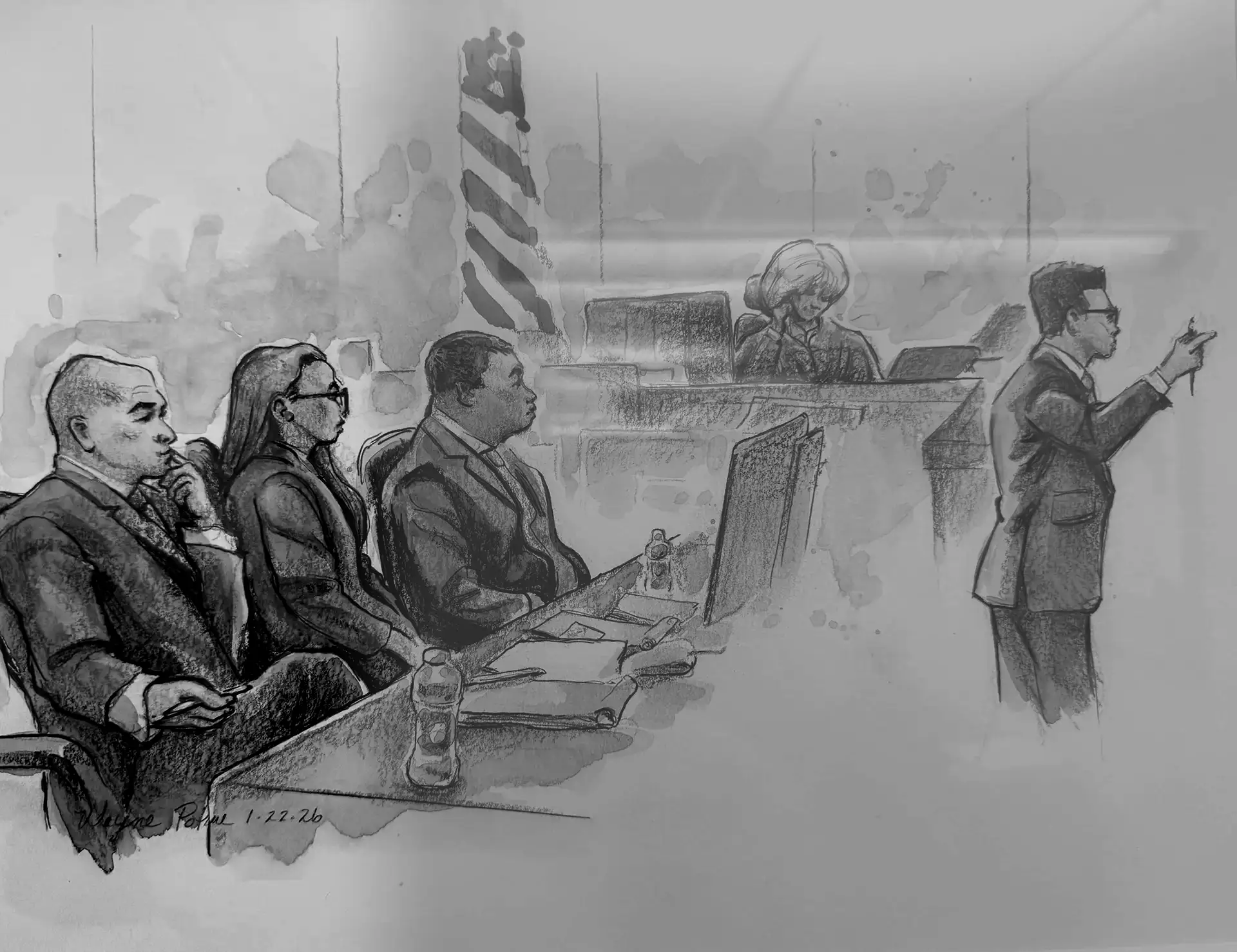
Machine gun possession, Cook County bench trial, 2026
The client was charged with Class X possession of a machine gun and was found not guilty at a bench trial.
- Cook County, Illinois
- Bench trial
- 2026
-
Narcotics and weapons possession, Cook County, 2018
Bedi & Singer represented a client charged with possession of narcotics and weapons. Bedi & Singer successfully argued a motion to quash arrest and suppress evidence, and all charges were dismissed.
- Cook County, Illinois
- 2018
-
Aggravated unlawful use of a weapon, Cook County, 2019
Bedi & Singer represented a client charged with aggravated unlawful use of a weapon in Cook County state court. The client was found not guilty in 2019.
Prior results do not guarantee a similar outcome.
Frequently asked questions
What is the difference between unlawful possession of a weapon and aggravated unlawful possession of a weapon in Illinois?
The aggravating factor. UUW is carrying a firearm in a vehicle or concealed on the person outside the home or business, a Class A misdemeanor on a first offense away from a school, park, courthouse, or the other places the statute lists, unless the weapon is a machine gun or another listed item. AUUW is that carrying plus one factor, among them a handgun uncased, loaded, and within reach without a concealed carry license, no FOID card, a person under 21 carrying a handgun, or an order of protection within the previous two years. AUUW is a Class 4 felony; a prior felony makes it a Class 2 felony with no probation.
I have a FOID card. Can I still be charged with unlawful possession of a weapon?
Yes. A FOID card allows a person to own a firearm, keep it at home, and transport it unloaded in a case. Carrying a loaded handgun in a car or in public requires a concealed carry license as well, so a FOID card holder stopped with a loaded handgun under the seat and no license can be charged with aggravated unlawful possession of a weapon. Whether the gun was in fact loaded, uncased, and within reach is for the State to prove.
The gun was in a car with several people in it. Can everyone be charged?
Everyone may be arrested, though each arrest needs probable cause as to that person; whether anyone can be convicted depends on possession. For a handgun, the State has to prove that the person charged knew the gun was in the car and had control over the place it was found. Illinois does treat a machine gun, a sawed-off shotgun, or an explosive found in a car as evidence that everyone in it possessed it, with narrow exceptions, such as a weapon found on one person. Who owned the car, who sat where, whose bag the gun was in, and what each person said at the scene decide these cases.
Contact Bedi & Singer
If you or someone in your family has been arrested on a weapons charge, or a gun was found in a car or a home you share, contact Bedi & Singer. What is said at the scene becomes the State’s proof of possession, and the detention hearing comes within days of an arrest.