
Armed Robbery and Carjacking Defense in Illinois
Defense for people charged with armed robbery, aggravated robbery, and vehicular hijacking in Cook County and across Illinois, from detention hearing to trial.
How a robbery or hijacking case begins
A robbery or vehicular hijacking case in Illinois usually begins with an identification: the person who was robbed describes someone, the police stop someone nearby who fits, and a show-up is held at the curb within the hour. The arrest follows, and a first court date within days.
Robbery, aggravated robbery, armed robbery, and vehicular hijacking are all charges on which the State can ask the court to hold the person until trial. Where the State proves a firearm, at least 15 years are added to the Class X range.
Bedi & Singer defends people charged with robbery and vehicular hijacking at the Leighton Criminal Court Building at 26th and California, in Cook County’s suburban courthouses, in the collar counties, and in courts across Illinois.
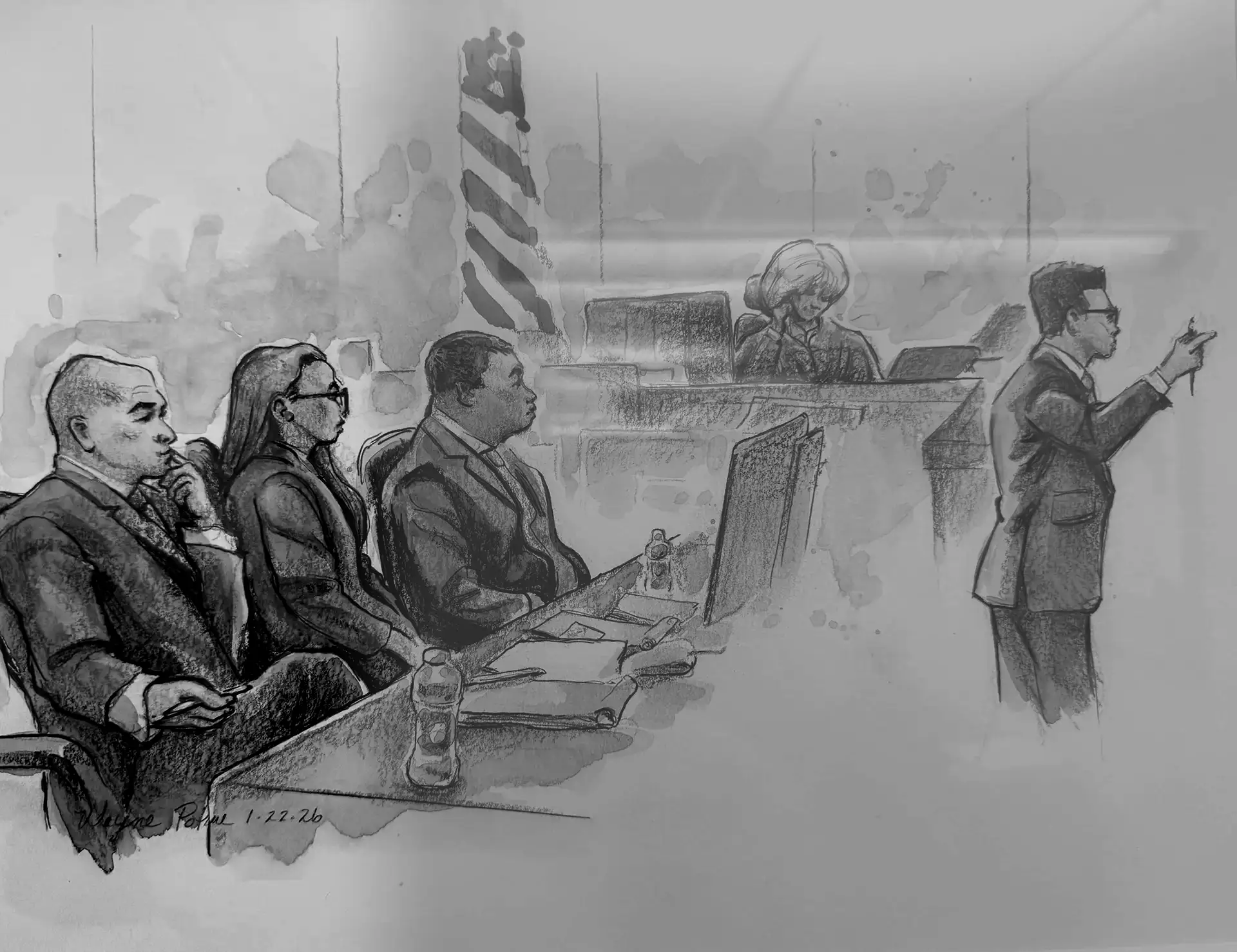
From the bench
“I’ve had experience with pretty much every criminal lawyer who works in this building and some who don’t. … [Y]ou are not going to get anybody better than these two people. And I know, because I have had experience with them in other cases, that they are going to fight like heck for you.”
From the bench, September 2024
Robbery, armed robbery, and vehicular hijacking
Robbery is taking property from the person or presence of another by force or by threatening the imminent use of force; force separates it from theft. On its own, it is a Class 2 felony, 3 to 7 years. It is a Class 1 felony, 4 to 15 years, if the victim was 60 or older or had a physical disability, or if the robbery took place in a school, a place of worship, or a child care setting the statute lists. Aggravated robbery includes a robbery in which the person said or signaled that they were armed, whether or not they were: a Class 1 felony, 4 to 15 years (720 ILCS 5/18-1).
Armed robbery is a robbery committed while armed with a dangerous weapon. With a weapon other than a firearm it is a Class X felony, 6 to 30 years (up to 60 with an extended term), with no probation. With a firearm, 15 years are added; if the person personally fired it, 20; and if that shot caused great bodily harm, permanent disability, permanent disfigurement, or death, 25 years up to natural life (720 ILCS 5/18-2). With day-for-day credit, about half of the sentence is served, unless the court finds that the robbery caused great bodily harm, in which case at least 85 percent must be served.
Vehicular hijacking, what most people call carjacking, is taking a motor vehicle from a person or their immediate presence by force or threat of force: a Class 1 felony, 4 to 15 years, with no probation. It becomes aggravated vehicular hijacking, a Class X felony, when the car was taken from someone 60 or older or with a physical disability, when a child under 16 was in the car, or when the person was armed, and the same firearm additions apply (720 ILCS 5/18-4). With a weapon other than a firearm, it carries 7 to 30 years.
The first weeks: detention, discovery, and the identification
The detention hearing is held at the first appearance, or within 48 hours of it if a continuance is granted. The State must prove its grounds by clear and convincing evidence; the defense can contest each one and propose conditions instead.
Discovery follows: the 911 call and the first description given, the show-up or photo array and how it was conducted, surveillance and license-plate reader video, and phone and location records. The arrest, the search, and any statements are reviewed for a motion to suppress, and the identification itself can be challenged where the procedure suggested the answer.
What a robbery or hijacking defense may require
These cases are tried on a few pieces of evidence, and the defense tests each one:
- The identification: the first description, the time the witness had, lighting and distance, and whether the show-up or array pointed the witness to one person
- Possession: how the client came to be in the car or near the property, and whether the State can show more than presence
- The weapon: whether there was one, whether it was a firearm, and who had it or fired it, which decides the class and the years added
- Accountability: what the State can prove the client knew and did, as against what someone else did
Robbery charged in federal court, under the Hobbs Act or the bank robbery statute, is a different case with different rules. Bedi & Singer handles those as part of its federal practice, described on its Hobbs Act Robbery page.
Both partners lead the defense on every case
Jonathan Bedi and Dena Singer work on Bedi & Singer’s robbery and hijacking cases together. Bedi & Singer keeps the client and the people close to them informed about what is happening and why, from the detention hearing on, and makes every decision, including whether to try the case to a judge or a jury, with the client.
The years added for a firearm are mandatory, and a Class X sentence cannot be reduced to probation. Bedi & Singer treats every robbery and hijacking charge with that weight.




Representative matters
-
Armed robbery and other charges, Cook County, 2026
Bedi & Singer represented a client charged with armed robbery and other offenses in Cook County, Illinois. The client pleaded guilty to a lesser charge and received a one-year sentence in the Illinois Department of Corrections in 2026.
-
Armed vehicular hijacking and attempted murder charges, Cook County, 2022
Bedi & Singer represented a client charged with armed vehicular hijacking, attempted murder and attempted armed robbery in Cook County state court. After extensive negotiations, Bedi & Singer secured a favorable sentence in 2022.
Prior results do not guarantee a similar outcome.
Frequently asked questions
What is the difference between robbery, aggravated robbery, and armed robbery in Illinois?
The weapon. Robbery is taking property from a person by force or threat of force, a Class 2 felony, or Class 1 if the victim was 60 or older or had a physical disability, or the robbery took place in a school, a place of worship, or a listed child care setting. Aggravated robbery adds a claim of being armed, by words or gestures, even if no weapon existed: a Class 1 felony. Armed robbery means the person actually carried a dangerous weapon: a Class X felony, 6 to 30 years with no probation, and more where the weapon was a firearm.
Is carjacking the same as vehicular hijacking in Illinois?
Yes. Illinois law calls carjacking vehicular hijacking: taking a motor vehicle from a person or their immediate presence by force or the threat of force, a Class 1 felony with no probation. It becomes aggravated vehicular hijacking, a Class X felony, when the car was taken from someone 60 or older or with a physical disability, when a passenger under 16 was in the car, or when the person was armed, and a firearm adds 15 years or more.
Can I be charged with armed robbery or hijacking if I was only a passenger?
Yes, and people are. Under Illinois accountability law, a person who helps plan or carry out an offense, with the intent to promote or facilitate it, is responsible for it as if they had committed it themselves, and acts by one participant in furtherance of a common plan are treated as the acts of all. Mere presence at the scene is not enough, and the State must prove what the person knew and did.
Contact Bedi & Singer
If you or someone in your family has been arrested or charged with robbery, armed robbery, or vehicular hijacking, or has been asked by police to come in about a robbery, contact Bedi & Singer. The identification and the first statements are made in the first days, and the detention hearing follows within them.