
Federal Homicide & Murder-for-Hire Defense
Defense for people charged in federal court with murder-for-hire, murder in aid of racketeering, and other federal homicide offenses in federal courts across the country.
How a federal homicide case begins
Most killings are prosecuted in state court. A killing becomes a federal case when a federal statute reaches it: a murder arranged for payment using a phone, a car or the mail; a killing committed for a racketeering enterprise; a death caused with a firearm during a federal robbery or drug crime; or a murder on land under federal jurisdiction. The charge often arrives inside a larger indictment, with recordings, phone records and cooperating witnesses already in hand.
The first court date comes within days, and the question at the detention hearing is whether the person will be held until trial. Several of these charges carry a possible life sentence, and the government moves for detention in nearly every one.
Bedi & Singer defends people charged with federal homicide offenses in the Northern District of Illinois, at the Dirksen courthouse a block from its office, and in federal courts across the country. A killing charged in Illinois state court is handled in Bedi & Singer’s state murder practice.
From a client
“I truly appreciate all your hard work and dedication you provided with both my son’s cases. Thank you for all the returned texts and phone calls.”
The federal homicide charges
Murder-for-hire (18 U.S.C. § 1958) requires travel in interstate commerce, or the use of the mail or any facility of interstate commerce, with intent that a murder be committed as consideration for a payment or a promise of anything of pecuniary value. A phone call or a text message is such a facility. The maximum is 10 years where no one is hurt, 20 where personal injury results, and death or life where a death results. Conspiring to do it carries the same penalties, and many of these cases are charged after a sting in which the “hitman” was an agent or an informant.
Violent crimes in aid of racketeering (18 U.S.C. § 1959) reach a murder, a kidnapping, a maiming, an assault with a dangerous weapon or a threat committed for payment from an enterprise engaged in racketeering activity, or to gain entrance to or keep or improve a position in it. Murder carries death or life; attempting or conspiring to murder carries up to 10 years. These counts usually sit inside a RICO indictment, and the government has to prove the enterprise and the motive, not only the killing.
A person who causes a death with a firearm during a federal crime of violence or drug trafficking crime (18 U.S.C. § 924(j)) faces death or any term of years up to life where the killing is murder. Murder within federal jurisdiction (18 U.S.C. § 1111), which covers killings within the special maritime and territorial jurisdiction of the United States, such as some federal land and property, carries death or life in the first degree and any term of years or life in the second. A death during a bank robbery or a carjacking can likewise carry death or life, and a death that results from distributing a drug such as heroin or fentanyl carries 20 years to life.
The first weeks: detention, discovery, and the recordings
The detention hearing is held at the first appearance, or, if either side asks for a continuance, generally within three working days on the government’s request and five on the defense’s. For a crime of violence or an offense that carries a possible life sentence, the government can move for detention and must show that no conditions would reasonably assure the person’s appearance and the safety of the community; where a firearm count under § 924(c) is charged, the law presumes detention, and the defense has to offer evidence against the presumption; the burden of proof stays with the government. Bedi & Singer prepares for that hearing as for a trial.
Discovery is large: recorded calls and meetings, phone extractions, cell-site data, surveillance, the autopsy and ballistics reports, and the plea agreements of cooperating witnesses. Statements taken in violation of the client’s rights, and searches or wiretaps that were not lawfully authorized, can be challenged by motion to suppress.
What a federal homicide defense may require
The government’s case usually rests on a few pieces of evidence, and the defense tests each one:
- The recordings: what was actually said, who proposed what, and whether the words prove intent and an agreement to pay
- The cooperating witnesses, the deals they made and the reasons they have to shade their accounts
- The federal element: the interstate facility, the enterprise and its racketeering activity, or the underlying robbery or drug crime
- The forensic evidence: the cause and manner of death, ballistics, DNA, and the timeline the phone and video records support
- Entrapment where the plan came from an informant or an undercover agent
This often calls for independent experts and a defense investigation that reaches the witnesses the government did not call. Every case is prepared for a jury.
Both partners lead the defense on every case
Jonathan Bedi and Dena Singer work on Bedi & Singer’s federal homicide cases together. A federal homicide charge reaches a whole family, and Bedi & Singer keeps the client and the people close to them informed about what is happening and why. Every decision, including whether to go to trial, is made with the client.



Representative matters
-
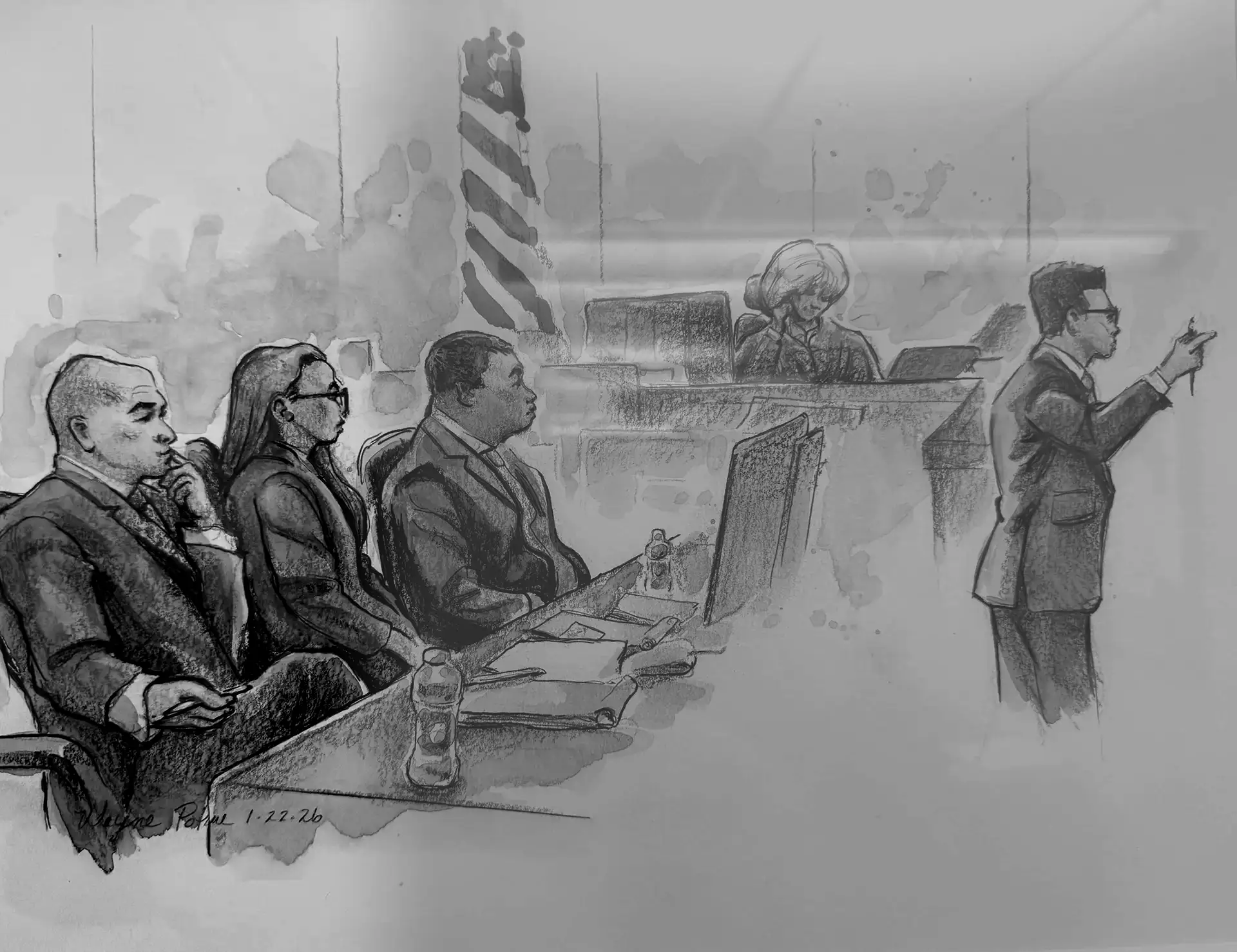
Murder-for-hire, Northern District of Illinois jury trial, 2026
A client went to jury trial in a federal murder-for-hire case. In January 2026, the jury acquitted the client on all charges.
U.S. District Court, Northern District of Illinois · Jury trial · 2026
Prior results do not guarantee a similar outcome.
Frequently asked questions
What makes a murder a federal case?
A federal statute has to reach it: a murder arranged for payment using a phone, the mail or interstate travel; a murder committed for a racketeering enterprise; a death caused with a firearm during a federal robbery or drug crime; a death during a bank robbery or a carjacking; or a murder on land under federal jurisdiction. The same killing can sometimes be charged by both governments, and which one proceeds is a decision prosecutors make.
What does a murder-for-hire charge require?
Three things: travel in interstate commerce or the use of the mail or a facility of interstate commerce, such as a phone; the intent that a murder be committed; and consideration, meaning the murder was to be committed in exchange for money or something else of economic value, paid or promised. No one has to be hurt, and the charge is often brought after a sting in which the person the client spoke to was an agent or an informant; the defense then examines who proposed the plan and whether the client was predisposed to it.
Is the death penalty possible in a federal murder case?
It is authorized for murder-for-hire where a death results, murder in aid of racketeering, a killing with a firearm during a federal crime where the killing is murder, first degree murder within federal jurisdiction, and a death during a bank robbery or a carjacking. The Attorney General decides whether the government seeks it, and before a decision to seek it the defense ordinarily has a chance to present the reasons against it. Where it is not sought, the sentence can still run to life.
Contact Bedi & Singer
If you or someone in your family has been arrested or charged in federal court with murder-for-hire, a killing in aid of racketeering or another federal homicide offense, or has been contacted by federal agents about a death, contact Bedi & Singer. The detention hearing comes within days, and the decisions made in the first week shape the case.