
Motions for a New Trial in Illinois
Post-trial motions in the trial court after a guilty verdict or finding in Cook County and across Illinois, from reviewing the record through the hearing and the appeal that follows.
The 30 days after a verdict
A guilty verdict from a jury, or a finding of guilty from a judge after a bench trial, is not the end of the case in the trial court. Illinois law allows the defense to ask the judge who presided for a new trial, by a written motion that states its grounds and is filed, generally, within 30 days of the verdict or finding. The motion is heard by the trial judge, usually before sentencing.
An error that is not raised in the motion is, as a general rule, treated as given up on appeal, so the motion largely decides which issues the reviewing courts will hear. That makes the weeks after a verdict a deadline for the whole case, not a pause before sentencing.
Bedi & Singer litigates post-trial motions at the Leighton Criminal Court Building at 26th and California, in Cook County’s suburban courthouses, in the collar counties, and in courts across Illinois, in cases it tried and in cases that come to it after the verdict.
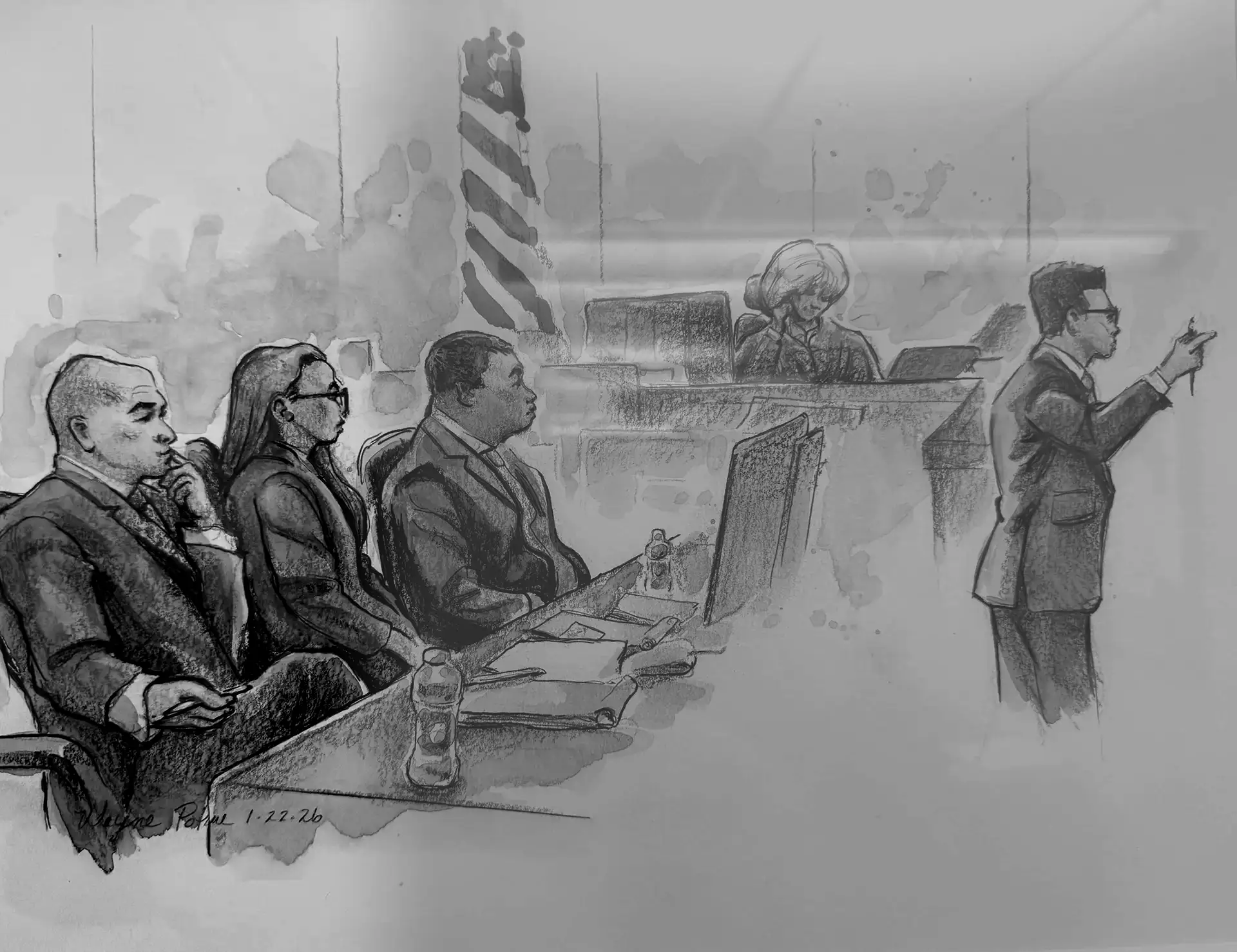
From the bench
“[A]s unlucky as you are to be in this situation, you hit the jackpot because you got a tremendous lawyer to represent you. And she has the backing of a really good law firm too, that’s her and her partner’s. … [Y]ou got an excellent lawyer and you are very fortunate to have her.”
From the bench, April 2025
What a motion for a new trial can argue
The statute leaves the grounds to the defense. In practice the motion argues that the evidence did not prove guilt beyond a reasonable doubt; that the court admitted evidence it should have excluded, or kept out evidence the defense was entitled to present; that the jury was wrongly instructed or heard what it should not have; that the State withheld evidence favorable to the defense; that the trial lawyer’s performance fell below what the Constitution requires; or that evidence found since the trial would likely change the result.
Building the motion means reading the whole record, transcripts, exhibits, sidebar rulings, the instructions conference and the pretrial motions, against what the law required at each step. Where Bedi & Singer tried the case, that record was built with the motion and the appeal in view. Where it did not, the review starts with ordering the transcripts, inside the 30 days.
Two other motions sit beside it. A motion in arrest of judgment, on the same 30-day clock, argues that the charge did not state an offense or that the court lacked jurisdiction. A motion for forensic testing asks the court that entered the judgment to order DNA, fingerprint or ballistics testing on evidence from the case that was not given that testing at the time, or that a method not available then could test more conclusively, where identity was the issue and the evidence has been kept in a proper chain of custody. After a trial, the result must be able to produce new evidence materially relevant to innocence; after a guilty plea, evidence that would make an acquittal at trial reasonably probable. The motion has no 30-day limit and can be brought years later.
Sentencing, the notice of appeal, and the case after the ruling
If the motion is denied, sentencing follows, and the sentence can itself be challenged by a motion to reconsider within 30 days; the Sentencing Hearings page describes that hearing. The notice of appeal is then due, under the Illinois Supreme Court’s rules, within 30 days of the sentence or, if a timely motion to reconsider the sentence is filed, of the ruling on it, and the appeal is argued on the record the post-trial motions preserved. Claims that rest on evidence outside the record usually belong in a post-conviction petition; the Post-Convictions page describes that proceeding.
If a new trial is granted, the charge is pending again, the client’s release while it is may be decided again, and the record of the first trial, with the testimony each witness has already given, becomes part of the defense of the second. A ruling that the evidence was legally insufficient is different: it is an acquittal, and the State cannot try the case again.
Both partners lead the defense on every case
Jonathan Bedi and Dena Singer handle Bedi & Singer’s post-trial motions together. In a case Bedi & Singer did not try, the first conversation is about the verdict date and the transcripts, because the clock has started.



Representative matters
-
Posttrial motions and sentencing, Cook County, 2022
Bedi & Singer represented a client in posttrial motions and sentencing after another lawyer handled the trial in Cook County state court. After sentencing, a different lawyer handled the appeal. The appellate court ordered a new sentencing proceeding based on an issue Bedi & Singer had raised.
Prior results do not guarantee a similar outcome.
Frequently asked questions
How long after a verdict do you have to file a motion for a new trial in Illinois?
Generally, 30 days. Illinois law requires a written motion for a new trial, stating its grounds, within 30 days after the verdict or the finding of guilty, with notice to the State. The same 30 days applies to a motion in arrest of judgment. A late motion may be refused, and an issue not raised in a timely motion is generally treated as forfeited on appeal, so the review of the record has to begin as soon as the verdict comes in.
What are the grounds for a new trial in a criminal case in Illinois?
The law does not list them; the motion states its own. The usual grounds are that the evidence was insufficient to prove guilt beyond a reasonable doubt, that the court wrongly admitted or excluded evidence or wrongly ruled on a pretrial motion, that the jury was misinstructed or exposed to improper argument or outside information, that the State withheld favorable evidence, that trial counsel was constitutionally ineffective, or that new evidence, which could not have been found with diligence before trial, would probably change the result. The trial judge decides whether an error affected the verdict.
Can new evidence overturn a conviction in Illinois?
It can, through the right procedure. Within 30 days of the verdict, newly discovered evidence is a ground for a motion for a new trial. At any time after a trial or a guilty plea, a motion for forensic testing can ask the court to order DNA, fingerprint or ballistics testing of evidence from the case where identity was the issue and the evidence has been properly kept; the result must be able to produce new evidence materially relevant to innocence or, after a plea, make an acquittal reasonably probable. New evidence of actual innocence can also be raised in a post-conviction petition, during or after the direct appeal, with no time limit for that claim. Which route fits depends on when the evidence surfaced and what it shows.
Contact Bedi & Singer
If you or someone in your family has been found guilty at trial in Cook County or elsewhere in Illinois and has not yet been sentenced, contact Bedi & Singer now. The motion for a new trial is generally due within 30 days of the verdict, and an issue it leaves out is usually lost on appeal.