
Federal Hobbs Act Robbery Defense
Defense for people charged in federal court with Hobbs Act robbery, bank robbery, and carjacking, and the firearm counts charged with them, in the Northern District of Illinois and in federal courts across the country.
How a federal robbery case begins
Robbery is usually a state crime. It becomes a federal case under the Hobbs Act when the robbery affects interstate commerce, which the courts have read to include the robbery of almost any business, and under separate statutes when the target is a bank or a car. Federal prosecutors in Chicago bring these cases against people accused of a series of robberies, often with several defendants in one indictment, and often after the state charge has been dropped.
What changes in federal court is the sentence. The robbery itself carries up to 20 years, and a firearm count charged with it adds a mandatory sentence that runs after the robbery sentence, not with it. Much of the defense is fought over that count.
Bedi & Singer defends people charged with federal robbery offenses in the Northern District of Illinois, at the Dirksen courthouse a block from its office, and in federal courts across the country. Armed robbery and vehicular hijacking charged in Illinois state court are handled in Bedi & Singer’s state practice.
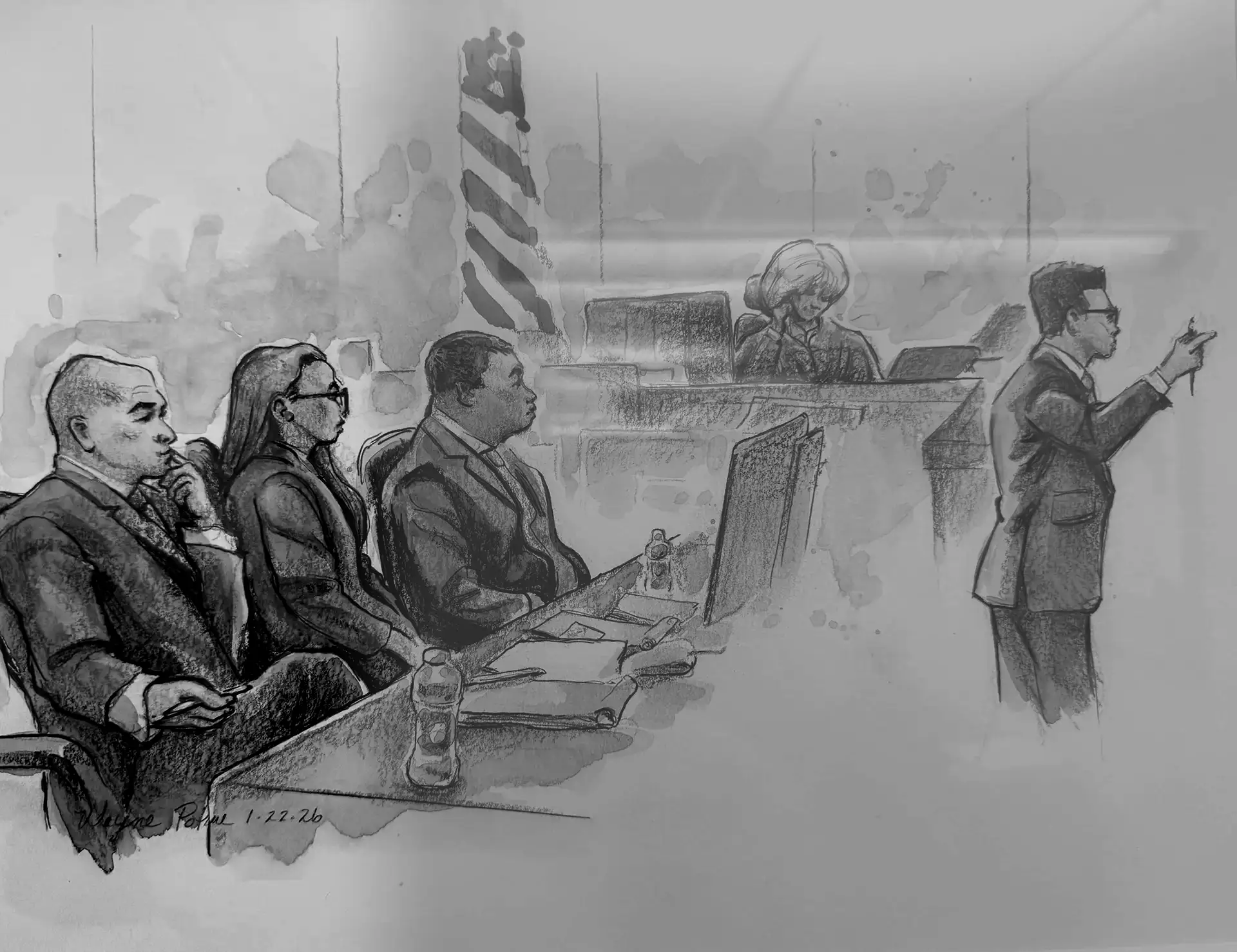
From the bench
“I’ve had experience with pretty much every criminal lawyer who works in this building and some who don’t. … [Y]ou are not going to get anybody better than these two people. And I know, because I have had experience with them in other cases, that they are going to fight like heck for you.”
From the bench, September 2024
Hobbs Act robbery, bank robbery, and carjacking
The Hobbs Act (18 U.S.C. § 1951) punishes robbery or extortion that obstructs, delays or affects commerce “in any way or degree,” and attempts and conspiracies to commit them, by up to 20 years. Robbery under the Act is taking property from a person or in their presence, against their will, by actual or threatened force, violence or fear of injury. The commerce element is the reason the case is federal, and the courts require very little: a store, a pharmacy or a business’s cash is usually enough. The element can be contested where the victim was an individual with no connection to a business.
Bank robbery (18 U.S.C. § 2113) is taking money or property from a bank, credit union or savings and loan by force and violence or by intimidation, and carries up to 20 years; up to 25 where the person assaults someone or puts a life in jeopardy with a dangerous weapon; and at least 10 years, or death or life where a death results, where someone is killed or forced to go along. Carjacking (18 U.S.C. § 2119) is taking a motor vehicle that has moved in interstate or foreign commerce from a person or in their presence by force or intimidation with intent to cause death or serious bodily harm, and carries up to 15 years, 25 where serious bodily injury results, and up to life or death where a death results.
The firearm count and what it adds
A person who uses or carries a firearm during and in relation to a crime of violence, or possesses one in furtherance of it, faces a separate count under 18 U.S.C. § 924(c) with a mandatory minimum of 5 years, 7 if the firearm was brandished, and 10 if it was discharged. That sentence cannot be served on probation and runs consecutively to the sentence for the robbery, and a § 924(c) violation committed after an earlier § 924(c) conviction has become final carries at least 25 years. Where the firearm causes a death and the killing is murder, the count can be brought under § 924(j) instead, which allows death or any term of years up to life but has no mandatory minimum and need not run consecutively.
The count has its own defenses. A completed Hobbs Act robbery is a crime of violence that supports it, but the Supreme Court held in 2022 that an attempted Hobbs Act robbery is not, and a conspiracy to commit one does not support the count either, so the way the robbery is charged decides whether the firearm count can stand. A person who did not carry the gun can be convicted of the count as an accomplice only if the government proves they knew in advance, in time to walk away, that someone would use or carry one, or as a conspirator if the gun was a foreseeable part of the robbery they agreed to. Whether the object was a firearm, who had it, and whether it was brandished or discharged are each questions of proof.
The first weeks and what the defense examines
The detention hearing is held at the first appearance, or, if either side asks for a continuance, generally within three working days on the government’s request and five on the defense’s. Robbery is a crime of violence, so the government can move for detention and must show that no conditions would reasonably assure the person’s appearance and the safety of the community; where a § 924(c) count is charged, the law presumes detention, and the defense has to offer evidence against the presumption; the burden of proof stays with the government. Bedi & Singer prepares for that hearing as for a trial.
The evidence is usually surveillance video, cell-site data, the identifications of clerks and witnesses, items recovered in a search, and the accounts of co-defendants who have agreed to cooperate. The defense tests each one: whether the video shows what the government says, whether the phone places the client at the robbery or only nearby, how the identifications were obtained, whether the stop or the search was lawful, and what the cooperating witnesses were promised. In a multi-defendant case the central question is what the client, as distinct from the group, is shown to have done and agreed to.
At sentencing the advisory guidelines for robbery add levels for an injury, the amount taken, the number of robberies and a weapon, though not for a gun already punished by a § 924(c) count, and the court then weighs the factors in 18 U.S.C. § 3553(a). An appeal from the Northern District of Illinois goes to the Seventh Circuit.
Both partners lead the defense on every case
Jonathan Bedi and Dena Singer work on Bedi & Singer’s federal robbery cases together. Clients are told what the evidence is and what the firearm count means for the sentence, and every case is prepared as though it will be tried.




Representative matters
-
Hobbs Act robbery, Northern District of Illinois, 2026
Bedi & Singer represented a client in a multi-defendant Hobbs Act robbery case. The client pled guilty and received a sentence below the guideline range. As part of the plea, a state case was dismissed.
- U.S. District Court, Northern District of Illinois
- 2026
-
Bank robbery, Northern District of Illinois, 2026
Bedi & Singer represented a client charged in two bank robberies. The client pled guilty and received probation.
- U.S. District Court, Northern District of Illinois
- 2026
Prior results do not guarantee a similar outcome.
Frequently asked questions
Why is my robbery case in federal court?
Because a federal statute reaches it. Under the Hobbs Act, a robbery that affects interstate commerce in any degree can be charged federally, and the courts treat the robbery of almost any business as affecting commerce. Bank robbery and carjacking are federal offenses under their own statutes. A state charge for the same conduct is usually dismissed once the federal case is filed.
What does a § 924(c) firearm count add to a robbery charge?
A mandatory sentence of at least 5 years, 7 if the firearm was brandished and 10 if it was fired, served after the sentence for the robbery rather than at the same time, with no probation. A violation committed after an earlier § 924(c) conviction has become final carries at least 25 years. The count depends on the robbery being a crime of violence: an attempted Hobbs Act robbery or a conspiracy to commit one does not support it.
Can I be charged with Hobbs Act robbery if no robbery happened?
Yes. The Hobbs Act punishes attempts and conspiracies to commit robbery, so a person can be charged on an intent to rob and a substantial step toward it, or on an agreement with others, with the same maximum as the completed offense. The difference matters for the firearm count, which cannot rest on an attempt or a conspiracy, and for what the government has to prove about the client’s own intent and agreement.
Contact Bedi & Singer
If you or someone in your family has been arrested or charged in federal court with Hobbs Act robbery, bank robbery or carjacking, or has learned that federal agents are investigating a robbery, contact Bedi & Singer. The detention hearing comes within days, and how the firearm count is charged shapes everything that follows.