
Repeat Offender Firearm/ Armed Habitual Criminal Defense in Illinois
Defense for people charged with unlawful possession of a firearm by a repeat felony offender, the charge formerly called armed habitual criminal, and other firearm charges built on a prior record, in Cook County and across Illinois.
How a repeat offender firearm case begins
A repeat offender firearm case begins the way most gun cases do, with a stop and a search, and then changes when the State runs the person’s record. Two prior convictions of the right kind turn a possession charge into unlawful possession of a firearm by a repeat felony offender, the offense Illinois called armed habitual criminal until 2025: a Class X felony, 6 to 30 years, with no probation, and at least 85 percent of the sentence must be served.
The record raises the stakes, but it does not change what the State has to prove. The stop and the search still have to be lawful, the possession still has to be proved, and each prior conviction has to be the kind the statute names.
Bedi & Singer defends people charged with repeat offender firearm offenses at the Leighton Criminal Court Building at 26th and California, in Cook County’s suburban courthouses, in the collar counties, and in courts across Illinois.
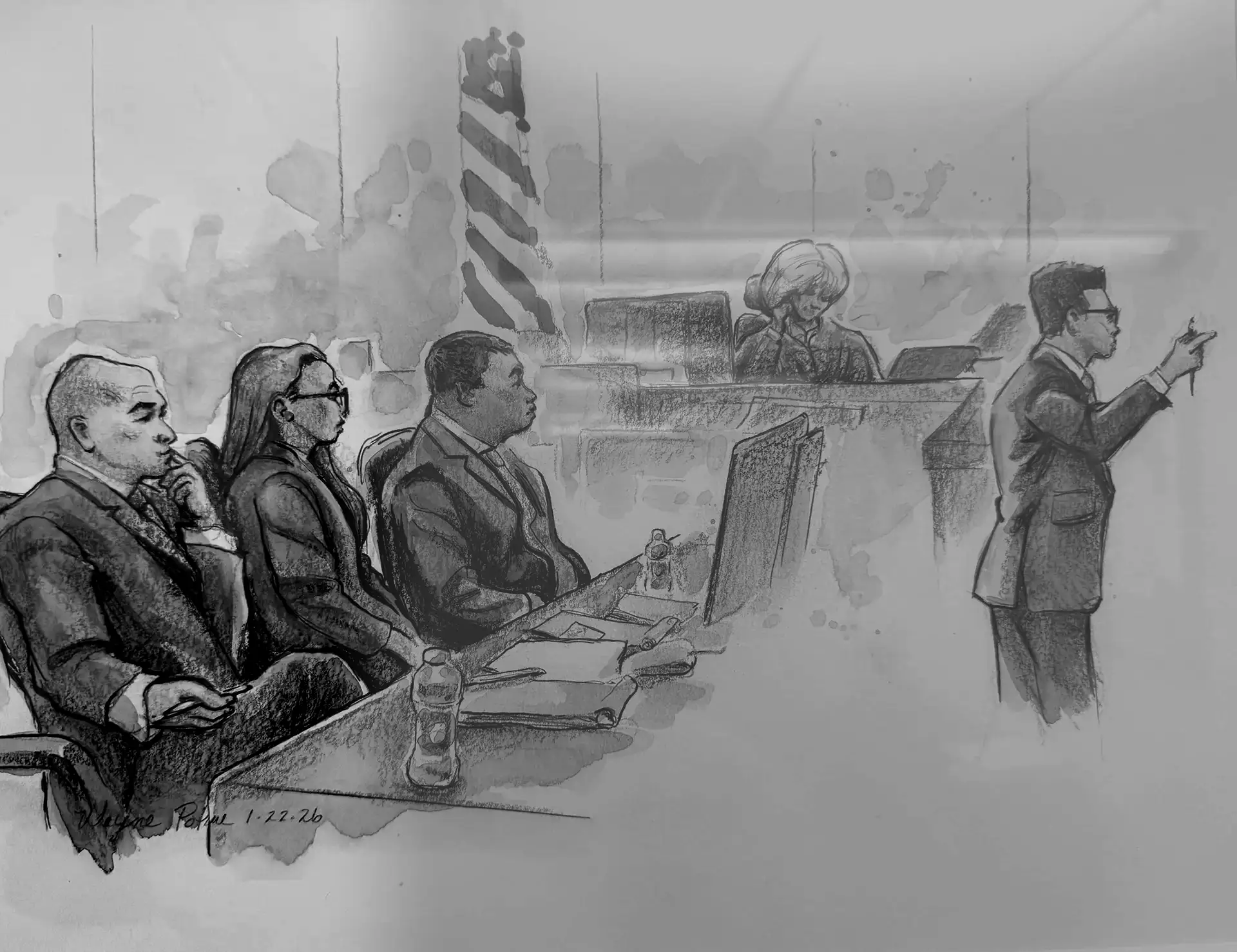
From the bench
“I’ve had experience with pretty much every criminal lawyer who works in this building and some who don’t. … [Y]ou are not going to get anybody better than these two people. And I know, because I have had experience with them in other cases, that they are going to fight like heck for you.”
From the bench, September 2024
Unlawful possession of a firearm by a repeat felony offender, and the charges below it
A person commits unlawful possession of a firearm by a repeat felony offender by receiving, selling, possessing, or transferring any firearm after two or more convictions, in any combination, of a forcible felony; unlawful possession of a weapon by a felon, aggravated unlawful possession of a weapon, aggravated discharge of a firearm, aggravated battery with a firearm, vehicular hijacking, home invasion, intimidation, or gunrunning, among others; or a Class 3 or higher felony under the Illinois Controlled Substances Act or the Cannabis Control Act (720 ILCS 5/24-1.7). It is a Class X felony, 6 to 30 years, with no probation, and at least 85 percent of the sentence must be served. The name changed on January 1, 2025; the elements did not.
Below it sit the charges one prior conviction supports. Unlawful possession of a weapon by a felon is a Class 3 felony, 2 to 10 years, on any prior felony, and a Class 2 felony, 3 to 14 years, where the prior was a forcible felony, a felony weapons offense, stalking, or a Class 2 or greater drug felony, where the person was on parole or mandatory supervised release, or on a second felon-in-possession offense. Aggravated unlawful possession of a weapon with a prior felony is a Class 2 felony, 3 to 7 years. None of these allows probation.
The prior convictions, and what the State has to prove about them
The prior convictions are an element of the offense, and the State proves them from certified court records. The defense reads those records: whether each conviction was for a listed offense or for something pleaded down to a lesser charge, and whether an out-of-state conviction matches an Illinois offense. If fewer than two qualifying convictions remain, the Class X charge comes off the table.
The record also shapes the trial: a jury will learn that the person has two qualifying convictions, because the State has to prove them, though a stipulation can keep out what they were for. That bears on whether the case is better tried to a judge.
The stop, the search, and the possession
Nearly every repeat offender firearm case begins with a police encounter the defense can challenge: a stop, a search, a pat-down, a warrant. A motion to quash the arrest and suppress the evidence asks whether the officer had a lawful reason for each step. If the motion is granted, the firearm cannot be used, and without it the State usually has no case. Bedi & Singer litigates that motion in every one of these cases. Where the stop holds, the State still has to prove possession: that the person knew the gun was there and controlled the place it was found, a contested fact in a car or a home shared with others.
Unlawful possession of a firearm by a repeat felony offender is named among the charges on which the State can petition to deny pretrial release, as are the non-probationable felon-in-possession charges. The hearing is held at the first appearance, or within 48 hours if a continuance is granted. To hold the person as a danger to others, the State must prove by clear and convincing evidence that the case against the person is strong, that the person poses a real and present threat, and that no release conditions can address it. The same conduct can be charged federally as felon in possession of a firearm, where three prior convictions for a violent felony or a serious drug offense, committed on separate occasions, carry a 15-year mandatory minimum; that is a different case in a different court, handled in Bedi & Singer’s federal practice and described on its Firearm Offenses and Felon in Possession page.
Both partners lead the defense on every case
Jonathan Bedi and Dena Singer work on Bedi & Singer’s repeat offender firearm cases together. Every case is prepared as one that may be tried, and in a Class X case with no probation the motion to suppress and the trial are usually the only ways out.




Representative matters
-
Armed habitual criminal, Cook County jury trial, 2025
The client was charged with armed habitual criminal and was found not guilty at a jury trial.
- Cook County, Illinois
- Jury trial
- 2025
-
Armed habitual criminal, motion to quash arrest and suppress evidence, Cook County, 2025
The client was charged with armed habitual criminal. Bedi & Singer successfully argued a motion to quash arrest and suppress evidence, and the case was dismissed.
- Cook County, Illinois
- 2025
-
Armed habitual criminal and aggravated discharge, motion to quash arrest and suppress evidence, Cook County, 2025
The client was charged with armed habitual criminal and aggravated discharge of a firearm. Bedi & Singer successfully argued a motion to quash arrest and suppress evidence. The motion was granted, and all charges were dismissed.
- Cook County, Illinois
- 2025
Prior results do not guarantee a similar outcome.
Frequently asked questions
Is armed habitual criminal still a charge in Illinois?
Yes, under a new name. On January 1, 2025, Illinois renamed the offense unlawful possession of a firearm by a repeat felony offender. The elements are the same: possessing, receiving, selling, or transferring a firearm after two or more qualifying convictions. It remains a Class X felony, 6 to 30 years, with no probation, and at least 85 percent served. Older cases, and most lawyers and judges, still call it armed habitual criminal.
Which prior convictions count for a repeat offender firearm charge in Illinois?
Two or more convictions, in any combination, from three groups: a forcible felony; a listed weapons or violence offense, among them unlawful possession of a weapon by a felon, aggravated unlawful possession of a weapon, aggravated discharge of a firearm, aggravated battery with a firearm, vehicular hijacking, and home invasion; or a Class 3 or higher felony under the Illinois Controlled Substances Act or the Cannabis Control Act. A conviction outside those groups, a juvenile adjudication, or a charge pleaded down to an offense outside those groups does not count, and the court file decides which it was.
What happens to a gun charge if the police stop or search was illegal?
The defense can move to suppress the gun, and if the motion is granted, the charge is usually dismissed. A motion to quash arrest and suppress evidence asks the judge to rule that the stop, the search, or the arrest violated the Fourth Amendment or Illinois law. If it did, the State generally cannot use what was found, though there are exceptions, among them an officer’s good-faith reliance on a warrant and evidence the police would have found lawfully anyway. The motion is heard before trial, on the officers’ testimony and the video. Because the gun and what the officers saw after the stop are usually the State’s whole case, the ruling on that motion often decides the case.
Contact Bedi & Singer
If you or someone in your family has prior convictions and has been arrested with a firearm, or charged with armed habitual criminal or unlawful possession of a firearm by a repeat felony offender, contact Bedi & Singer. The detention hearing comes within days, and the motion that may end the case is built from the first police report.