
Public Corruption & Campaign Finance Defense
Defense for public officials, candidates, campaign professionals, donors, and contractors facing federal bribery, public corruption, and campaign-finance investigations and charges.
How a public corruption case begins
A public corruption or campaign-finance investigation can begin with little warning. A grand jury subpoena may seek campaign records, contracts, messages, bank information, or communications with a public official. Federal agents may ask about a payment, contribution, fundraiser, government decision, or relationship that seemed lawful when it occurred.
An FEC complaint or ethics inquiry may develop alongside a criminal investigation.
Bedi & Singer has handled bribery and public corruption prosecutions, and represents clients facing federal and state campaign-finance allegations, FEC challenges, government ethics issues, and related political-law matters.
From the bench
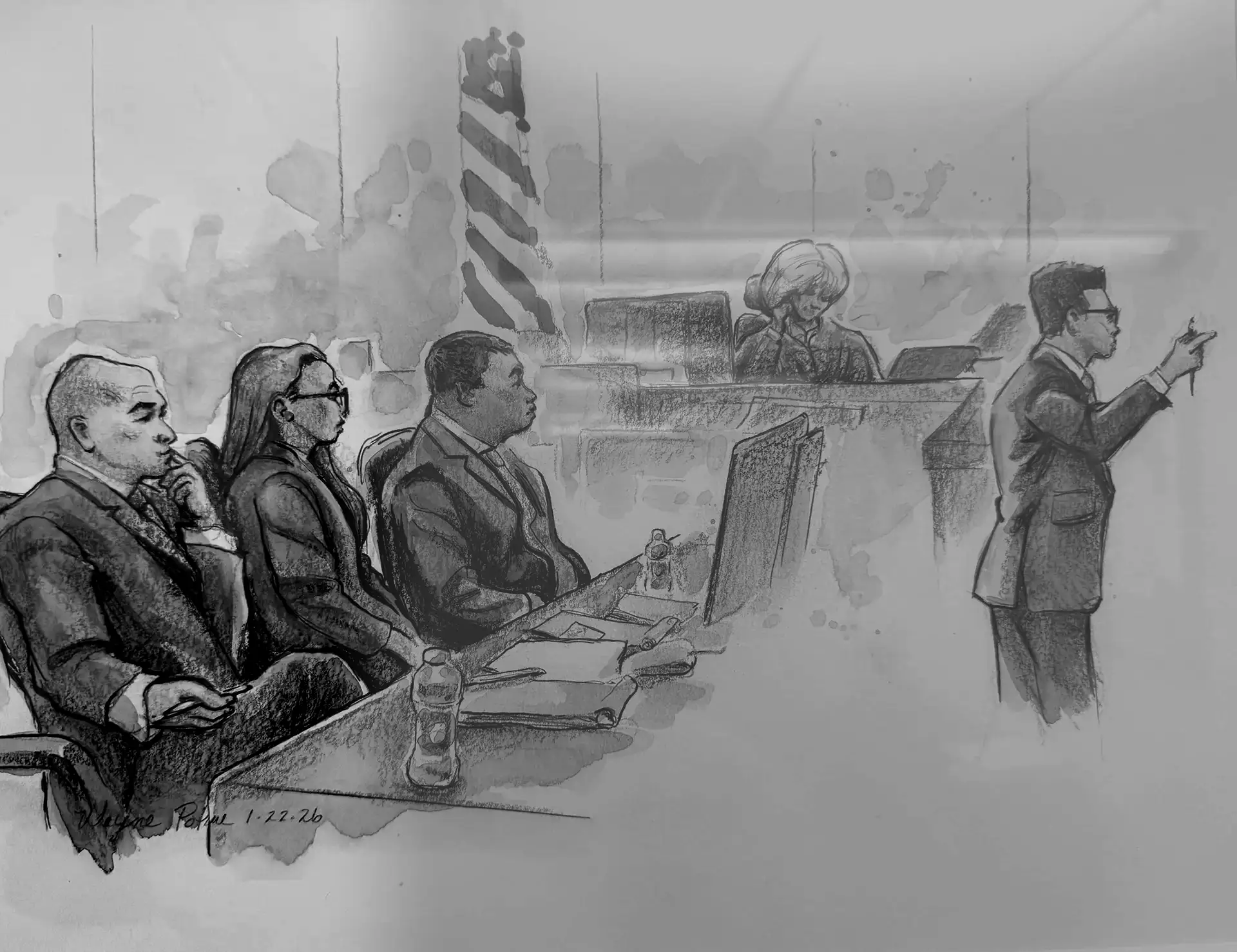
“[A]s unlucky as you are to be in this situation, you hit the jackpot because you got a tremendous lawyer to represent you. And she has the backing of a really good law firm too, that’s her and her partner’s. … [Y]ou got an excellent lawyer and you are very fortunate to have her.”
From the bench, April 2025
Public corruption is not a single criminal charge
Public corruption investigations can involve several federal statutes. Federal bribery law, 18 U.S.C. Section 201, addresses corrupt offers, payments, requests, or agreements involving federal public officials and official acts. 18 U.S.C. Section 666 addresses bribery, theft, and embezzlement involving agents of state, local, and tribal governments and other organizations that receive more than $10,000 a year in federal program funds.
Cases may also involve honest-services fraud, Hobbs Act extortion, false statements, obstruction, conspiracy, or related offenses.
A payment, gift, political contribution, business relationship, or request for assistance is not automatically a bribe. The government must prove the elements of the offense charged, including, for bribery, corrupt intent and the connection between the thing of value and the government action at issue.
The timing of a payment, what was understood before an official act, and the evidence of intent can be central to the defense.
Campaign-finance investigations can be civil, administrative, or criminal
The Federal Election Commission has civil and administrative enforcement authority, while the Department of Justice handles criminal campaign-finance cases.
Criminal allegations can involve excessive contributions, contributions made in the name of another person, prohibited foreign-national contributions, misuse or conversion of campaign funds, false reporting, or related false statements and conspiracies. Under the Federal Election Campaign Act, criminal penalties generally depend on a knowing and willful violation and on the amount or type of activity involved.
A reporting error, reimbursement arrangement, contribution issue, or misunderstanding of a technical rule is not automatically a federal crime.
The investigation often expands beyond the payment or contribution
Investigators may review bank records, campaign reports, contracts, emails, text messages, calendars, donor records, government files, lobbying activity, and testimony from other participants. The defense often turns on questions like these:
- What did the client actually know and intend?
- Was there an agreement to exchange something of value for official action?
- Has the government correctly identified the relevant official act or government decision?
- Who directed the transaction, and what information was provided to a treasurer or campaign professional?
- Were campaign funds or contributions handled and reported as the client understood them to be?
- Did another participant act independently or outside the client’s knowledge?
- Do cooperating witnesses have credibility or motive issues?
- Can statements, searches, subpoenas, or electronic evidence be challenged?
Responding before charges are filed
A subpoena, FBI contact, FEC notice, or request for an interview does not mean criminal charges are inevitable, but decisions made early can become important later. Bedi & Singer represents targets, subjects, and witnesses in federal investigations and advises clients in responding to subpoenas.
Early representation can allow counsel to determine what the government appears to be investigating, preserve evidence, evaluate potential exposure, and communicate with investigators before a client makes statements or produces material.
For public officials, candidates, campaign professionals, donors, contractors, and executives, the response should also account for parallel regulatory, professional, or public consequences.
Both partners lead the defense on every case
Jonathan Bedi and Dena Singer work on Bedi & Singer’s cases together, discussing strategy, motion practice, witness issues, negotiations, and trial decisions, with associates contributing where their work benefits the defense.
Clients are kept informed about what is happening and why particular decisions are being made.



Representative matters
-
Bribery involving police records, Northern District of Illinois, 2018
Bedi & Singer represented an individual charged with bribing members of the Chicago Police Department for records. The client pleaded guilty and received a below-guideline sentence in 2018.
-
Social Security Administration employee prosecution, 2020
Bedi & Singer represented a senior administrator of the Social Security Administration in a case involving the sale of personal information. The client pleaded guilty and received a sentence significantly below the guideline range.
Prior results do not guarantee a similar outcome.
Frequently asked questions
Does a payment or gift to a public official automatically constitute bribery?
No. Federal bribery statutes require proof of specific statutory elements, including corrupt intent for a bribery charge and the required connection to official action or government business. The timing, purpose, surrounding communications, and parties’ understanding can matter.
Can an FEC matter become a criminal case?
Yes. The FEC has civil and administrative enforcement authority, and apparent knowing and willful violations can be referred for criminal investigation. Criminal campaign-finance cases are investigated by the FBI and prosecuted by the Department of Justice, usually through the local U.S. Attorney’s Office. The existence of an FEC complaint, however, does not itself establish a criminal violation.
What should I do if agents or prosecutors ask to interview me about campaign activity or a public official?
You can consult counsel before deciding whether or how to respond. An interview that seems informal may become evidence in a broader investigation. Counsel can evaluate what is known, communicate with investigators where appropriate, and advise you before any interview or document production.
Contact Bedi & Singer
If you have received a grand jury subpoena, been contacted by federal investigators, learned that you are the subject or target of a public corruption investigation, or are facing a campaign-finance or FEC matter with potential criminal exposure, contact Bedi & Singer.
Early involvement gives Bedi & Singer an opportunity to understand the government’s theory, identify the governing legal issues, and begin evaluating the evidence before important decisions are made.