
Federal Drug Conspiracy & Drug Trafficking Defense
Defense for people charged in federal court with drug conspiracy, distribution and possession with intent to distribute, including the quantity-based mandatory minimums and prior-conviction enhancements, in the Northern District of Illinois and in federal courts across the country.
How a federal drug case begins
A federal drug case usually begins with an investigation the person knows nothing about: a wiretap, pole cameras, controlled buys through an informant, or a traffic stop that turns out to have been planned. The arrests come all at once, and one person can be among twenty defendants in an indictment that describes an organization and a quantity of drugs they never saw.
What makes these cases different from state drug cases is the sentence. The quantity charged sets a mandatory minimum of 5 or 10 years that the judge cannot go below unless an exception applies, a prior drug or violent conviction can raise it, and the law presumes detention before trial.
Bedi & Singer defends people charged with federal drug offenses in the Northern District of Illinois, at the Dirksen courthouse a block from its office, and in federal courts across the country. Drug charges in Illinois state court are handled in Bedi & Singer’s state practice.
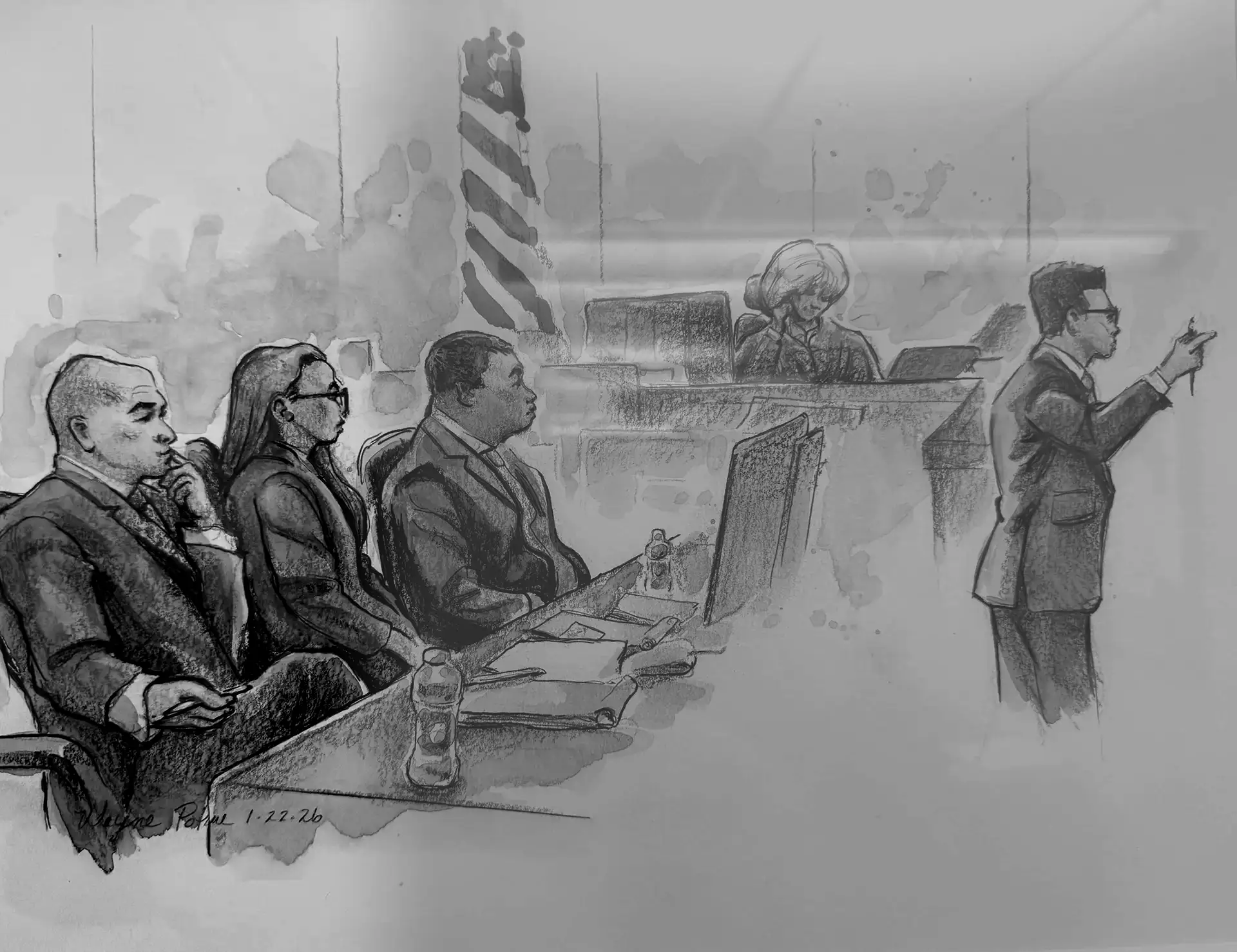
From the bench
“[A]s unlucky as you are to be in this situation, you hit the jackpot because you got a tremendous lawyer to represent you. And she has the backing of a really good law firm too, that’s her and her partner’s. … [Y]ou got an excellent lawyer and you are very fortunate to have her.”
From the bench, April 2025
Conspiracy, distribution, and the quantity thresholds
Distributing a controlled substance, or possessing it with intent to distribute (21 U.S.C. § 841), is punished by quantity. Most distribution counts carry up to 20 years with no minimum. A count involving 100 grams of heroin, 500 grams of cocaine, 28 grams of crack, 40 grams of fentanyl, 5 grams of pure methamphetamine or 100 kilograms of marijuana carries 5 to 40 years. Ten times those amounts carries 10 years to life. For most drugs the weight is of the whole mixture, not the pure drug; methamphetamine and PCP also have pure-drug thresholds. Where a death or serious bodily injury results from the drug, the minimum becomes 20 years, or life with a qualifying prior conviction.
A conspiracy to commit any of these offenses (21 U.S.C. § 846) carries the same penalties as the offense itself. The government does not have to prove that the person touched the drugs; it has to prove that the person knowingly agreed with at least one other person to distribute, and the quantity that sets the minimum must be proved beyond a reasonable doubt as to that person. Separating the client’s own agreement from the organization’s kilograms is the center of the defense.
A prior conviction raises the floor, but only if the government files a notice before trial or a plea (21 U.S.C. § 851). For the 5- and 10-year minimums the prior has to be a “serious drug felony” or “serious violent felony,” which since 2018 means a qualifying drug or violent felony, final before the new offense, for which the person actually served more than a year and, for a drug felony, from which the person was released within 15 years of the new offense. One such prior raises the 10-year minimum to 15 and the 5-year minimum to 10; two raise the 10-year minimum to 25. On a count carrying up to 20 years with no minimum, any earlier felony drug conviction raises the maximum to 30 years, and where a death or serious bodily injury results it makes life mandatory. Distribution within 1,000 feet of a school or public housing doubles the maximum and carries a one-year minimum, and a firearm possessed in furtherance of the offense is a separate count with its own consecutive 5-year minimum.
The first weeks: detention and the evidence
The detention hearing is held at the first appearance or, if either side asks for a continuance, generally within three working days on the government’s request and five on the defense’s. For any drug offense with a maximum of ten years or more, which includes nearly every federal distribution and conspiracy count, the law presumes that no conditions of release are adequate; the defense answers it with the person’s history, ties, employment and a release plan, and the government keeps the burden of proving that detention is needed. Bedi & Singer prepares for that hearing as for a trial; the presumption is rebutted more often than people expect.
Discovery follows: the wiretap applications and the recorded calls, text messages, surveillance footage, lab reports, the informant’s recordings, and the agreements of cooperating co-defendants. A wiretap authorized without the showing the statute requires, a stop or search made without cause, or a statement taken in violation of the client’s rights can be challenged by motion to suppress.
What a drug conspiracy defense may require
The questions the defense works through are usually these:
- What the client, as distinct from the organization, actually agreed to, and with whom
- Whether the quantity charged can be tied to the client, and whether the lab results and weights hold up
- What the calls and texts actually say; the agent’s reading of coded language is an opinion, not a fact
- Whether the informant and the cooperating witnesses are telling the truth, and what they were promised
- Whether the searches, the stop and the wiretap were lawful
At sentencing the advisory guidelines turn on the drug quantity attributed to the person and on their role, and the court weighs them against the factors in 18 U.S.C. § 3553(a). Two exceptions can take a person below the mandatory minimum: the safety valve, for a person with a limited record who did not use violence or possess a gun in connection with the offense and was not a leader; and a government motion for a person who has provided substantial assistance. Whether to cooperate is the client’s decision.
Both partners lead the defense on every case
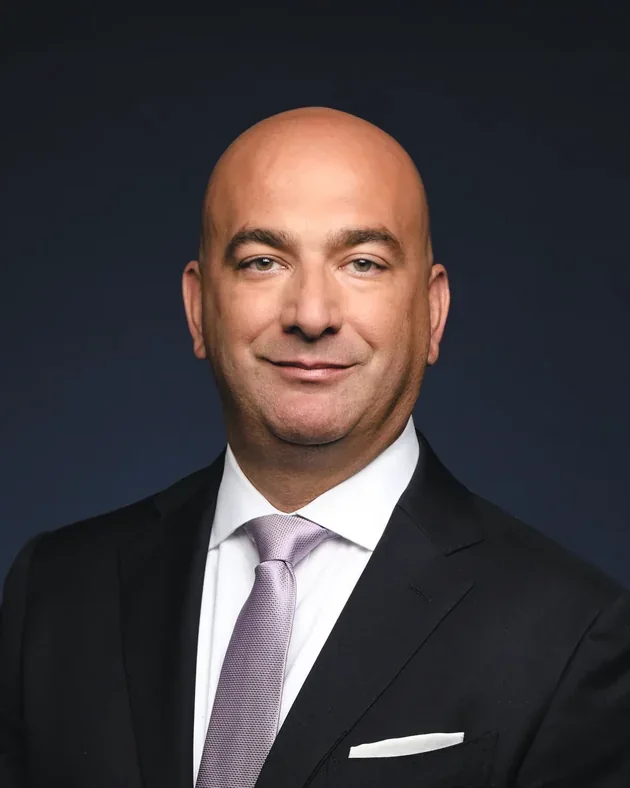
Jonathan Bedi and Dena Singer work on Bedi & Singer’s federal drug cases together. In a case with many defendants the client needs lawyers who answer only to them, on what the evidence against them is, what their own exposure is, and what each choice would mean. Every case is prepared as though it will be tried.


Representative matters
-
Drug conspiracy, Northern District of Illinois jury trial, 2025
Bedi & Singer represented a client in a two-defendant drug conspiracy case. A jury found the client guilty, and after trial the client received a sentence far below the guideline range.
- U.S. District Court, Northern District of Illinois
- Jury trial
- 2025
-
Drug conspiracy, Northern District of Illinois, 2022
Bedi & Singer represented a client in a large-scale drug conspiracy case with multiple defendants and an investigation that spanned multiple years. The client pled guilty and received a sentence below the guideline range.
- U.S. District Court, Northern District of Illinois
- 2022
-
Drug conspiracy, Northern District of Illinois, 2021
A client was charged with distributing a significant amount of narcotics across state lines. The client pled guilty and received probation.
- U.S. District Court, Northern District of Illinois
- 2021
Prior results do not guarantee a similar outcome.
Frequently asked questions
How can I be charged with a drug conspiracy if I never touched the drugs?
Because a conspiracy charge is about the agreement, not the drugs. The government has to prove that the person knowingly agreed with at least one other person to distribute a controlled substance, not that the person handled, sold or saw the drugs, or that anyone did anything to carry out the agreement. Being present, knowing what others were doing, or buying for personal use is not by itself a conspiracy to distribute.
What are the quantity thresholds for a federal mandatory minimum?
Five years to 40 for 100 grams of heroin, 500 grams of cocaine, 28 grams of crack, 40 grams of fentanyl, 5 grams of pure methamphetamine or 50 grams of a methamphetamine mixture, or 100 kilograms of marijuana. Ten years to life for ten times those amounts: 1 kilogram of heroin, 5 kilograms of cocaine, 280 grams of crack, 400 grams of fentanyl, 50 grams of pure methamphetamine or 500 grams of a mixture, or 1,000 kilograms of marijuana. For most drugs the weight includes the whole mixture. A qualifying prior conviction raises each minimum, and a death or serious bodily injury from the drug raises it to 20 years, or to life with a qualifying prior.
Does the safety valve apply to my case?
Possibly. The safety valve lets the court sentence below the mandatory minimum on a distribution or conspiracy count where the person has a limited criminal record, did not use violence or threats or possess a firearm in the offense, was not an organizer, leader or supervisor of others, the offense caused no death or serious injury, and, by the time of sentencing, the person has truthfully told the government everything they know about the offense. That is not the same as testifying against anyone, and the information cannot be used to raise the sentence unless it relates to a violent offense. Whether the record qualifies is decided under the guidelines’ point system, which a lawyer can work out before any decision is made.
Contact Bedi & Singer
If you or someone in your family has been arrested or charged in a federal drug case, or has learned that federal agents are investigating, contact Bedi & Singer. The detention hearing comes within days, and the quantity and the priors in the indictment are where the defense begins.