
Federal Firearm & Felon in Possession Defense
Defense for people charged in federal court with felon in possession and the other prohibited-person offenses, straw purchases and firearm trafficking, machine guns, the Armed Career Criminal Act, and firearm counts charged with drug and robbery offenses, in the Northern District of Illinois and in federal courts across the country.
How a federal gun case begins
Most gun possession cases in Chicago begin in state court, with a traffic stop, a search or an arrest on the street, and some of them become federal. Federal prosecutors often adopt a case when the person has a felony record, when the firearm is a machine gun or carries a conversion switch, or when the gun is tied to drugs or a robbery; the state charge is usually dismissed and the case starts over at the Dirksen courthouse.
What changes in federal court is the exposure. Possessing a firearm as a prohibited person carries up to 15 years, three qualifying prior convictions make 15 years the minimum, and a firearm count attached to a drug or robbery charge adds a mandatory consecutive sentence. The defense begins with the stop or the search.
Bedi & Singer defends people charged with federal firearm offenses in the Northern District of Illinois, at the Dirksen courthouse a block from its office, and in federal courts across the country. Gun charges in Illinois state court are handled in Bedi & Singer’s state practice: unlawful possession of a weapon and repeat offender firearm charges.
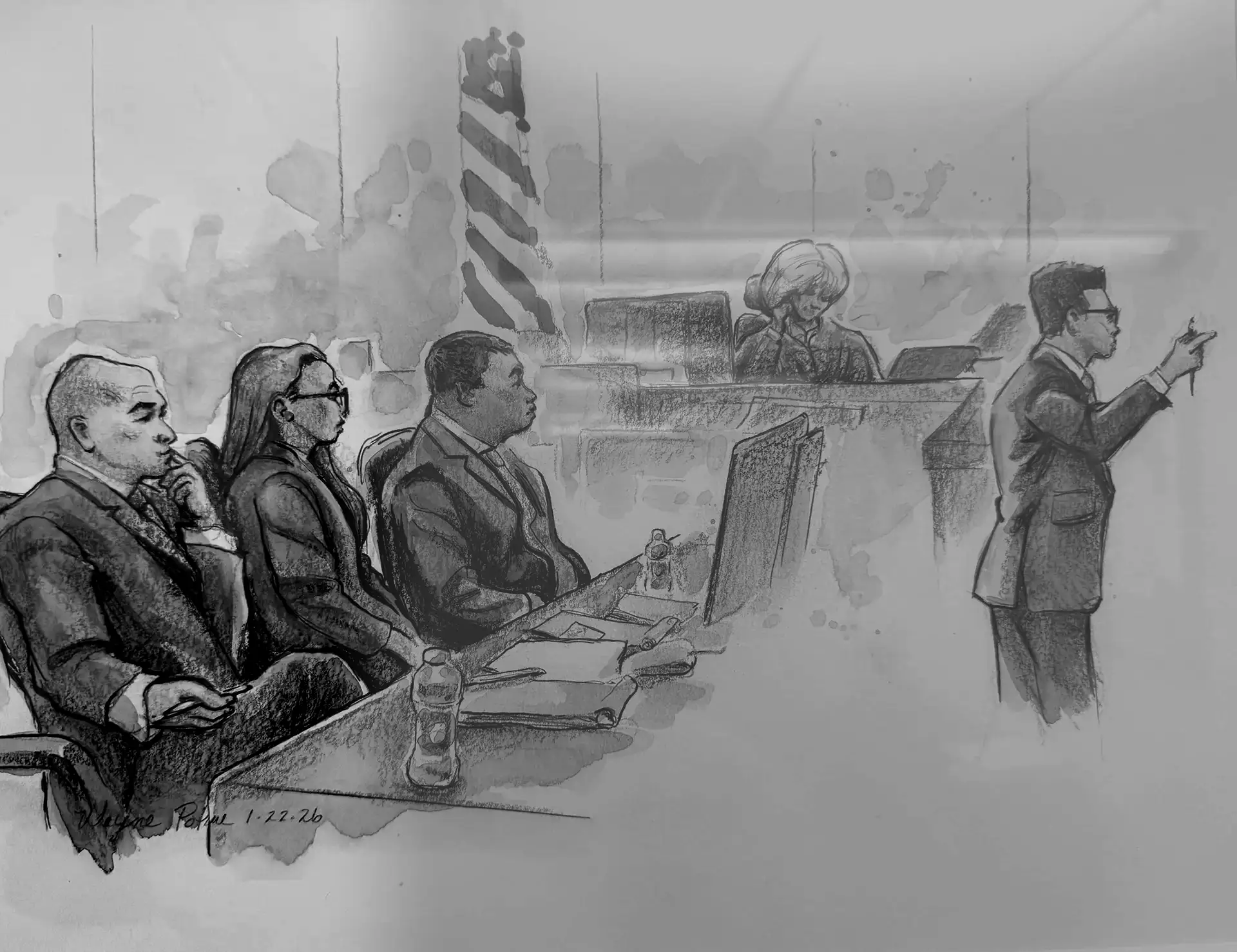
From the bench
“[A]s unlucky as you are to be in this situation, you hit the jackpot because you got a tremendous lawyer to represent you. And she has the backing of a really good law firm too, that’s her and her partner’s. … [Y]ou got an excellent lawyer and you are very fortunate to have her.”
From the bench, April 2025
Felon in possession and the other prohibited-person offenses
Federal law (18 U.S.C. § 922(g)) makes it a crime for nine classes of people to possess a firearm or ammunition that has moved in interstate commerce, which nearly every firearm has. The classes most often charged are a person convicted of a crime punishable by more than a year in prison, an unlawful user of a controlled substance, and a person convicted of a misdemeanor crime of domestic violence or under a qualifying protective order. Possession can be actual or constructive, so a gun in a shared car or home is often the whole case, and the government must prove that the person knew they belonged to the prohibited class, not only that they had the gun.
The maximum is 15 years, raised from 10 by Congress in 2022. Under the Armed Career Criminal Act (18 U.S.C. § 924(e)), a person with three prior convictions for a violent felony or a serious drug offense, committed on occasions different from one another, faces a minimum of 15 years and a maximum of life, with no probation. Which priors count, and whether they were separate occasions, are litigated before sentencing.
Knowingly lying on the federal form to buy a gun from a licensed dealer, about a fact that matters to whether the sale is lawful (18 U.S.C. § 922(a)(6)), carries up to 10 years. Since 2022, a straw purchase for a person who cannot lawfully have the gun (§ 932) and trafficking a gun to such a person (§ 933) each carry up to 15 years, and 25 for a straw purchase made knowing, or with reasonable cause to believe, that the gun will be used in a felony. Possessing a machine gun carries up to 10 years, and a conversion switch is a machine gun under federal law whether or not it is attached to a pistol.
The firearm count on a drug or robbery charge
A person who uses or carries a firearm during and in relation to a crime of violence or a drug trafficking crime, or possesses one in furtherance of it, faces a separate count under 18 U.S.C. § 924(c) with a mandatory minimum of 5 years, 7 if the firearm was brandished and 10 if it was discharged, served consecutively to every other sentence, with no probation. If the firearm is a machine gun or has a silencer, the minimum is 30 years. The count stands or falls on the underlying offense: not every robbery charge is a crime of violence, and a gun found near drugs is not always possessed “in furtherance” of selling them. Bedi & Singer handles these counts as part of its drug and robbery defense.
The first weeks and what the defense examines
The detention hearing is held at the first appearance or, if either side asks for a continuance, generally within three working days on the government’s request and five on the defense’s. Because the charge involves a firearm, the government can move for detention and must show that no conditions would reasonably assure the person’s appearance and the safety of the community; there is no presumption of detention based on a possession charge alone, though there is one where a § 924(c) count is charged. Bedi & Singer prepares for that hearing as for a trial.
Most federal gun cases are won or lost on the stop and the search. Whether the police had a lawful reason to stop the car or the person, to search the car, the bag or the home, and to seize the gun is litigated by motion to suppress. The defense also examines who possessed the gun where several people had access to it, the DNA and fingerprint testing, and the record that makes the person a prohibited person: a conviction later vacated, or rights that were restored, can take the person out of the statute.
Since the Supreme Court’s Second Amendment decisions of 2022 and 2024, people charged under § 922(g) have argued that the statute cannot constitutionally be applied to them. In 2026 the Supreme Court held that the unlawful-user provision could not be applied to a man prosecuted only because he used marijuana a few times a week, and some courts have accepted the argument for people with nonviolent felony records. The Seventh Circuit upheld the felon-in-possession statute in 2026 for a person whose earlier felony, drug dealing, it treated as dangerous, and left open whether a person with a non-dangerous felony can be disarmed. At sentencing the advisory guidelines turn on the person’s record and the type of firearm, and the court weighs the factors in 18 U.S.C. § 3553(a). An appeal from the Northern District of Illinois goes to the Seventh Circuit.
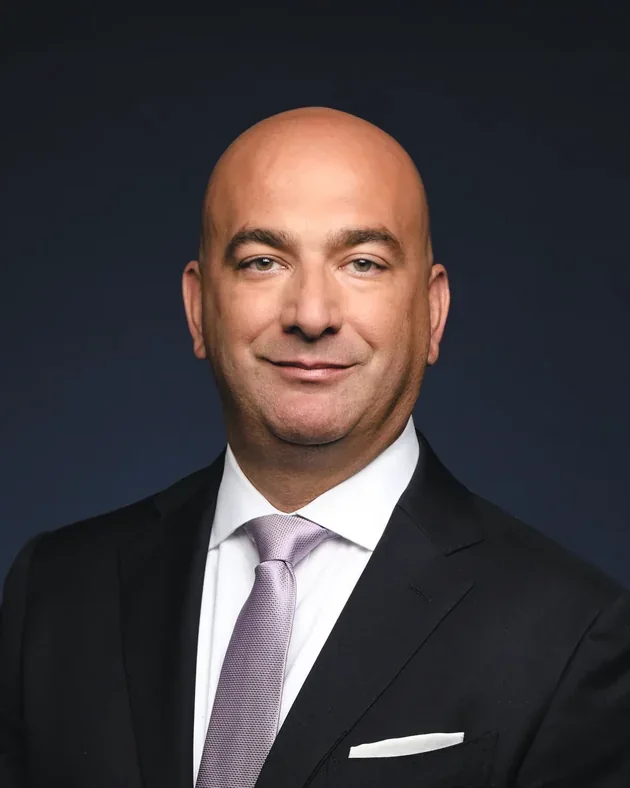
Both partners lead the defense on every case
Jonathan Bedi and Dena Singer work on Bedi & Singer’s federal firearm cases together. Every case is prepared as though it will be tried.



Representative matters
-
Federal firearm possession by a felon, Northern District of Illinois, 2019
Bedi & Singer represented a client charged in federal court with possession of a firearm by a felon. Bedi & Singer successfully challenged the charges at the preliminary hearing, and the case was dismissed.
- U.S. District Court, Northern District of Illinois
- 2019
-
Federal firearm charge, Northern District of Illinois, 2020
Bedi & Singer represented a client facing a federal firearm charge under 18 U.S.C. § 922(g). Bedi & Singer identified grounds for a motion to quash arrest and suppress evidence and explained to the government why the motion would succeed. The government dismissed the charges.
Prior results do not guarantee a similar outcome.
Frequently asked questions
Who is prohibited from possessing a firearm under federal law?
Nine classes of people: people convicted of a crime punishable by more than a year in prison, with some exceptions, fugitives, unlawful users of or people addicted to a controlled substance, people adjudicated mentally incompetent or committed to a mental institution, people unlawfully in the country or on most nonimmigrant visas, people dishonorably discharged from the military, people who have renounced citizenship, people under a qualifying domestic violence protective order, and people convicted of a misdemeanor crime of domestic violence. It is also a crime to sell a gun to someone the seller knows or has reason to believe is in one of these classes, and in a possession case the government has to prove that the person knew they were in the class.
What is the Armed Career Criminal Act?
A sentencing statute. A person convicted of possessing a firearm as a prohibited person who has three prior convictions for a violent felony or a serious drug offense, committed on separate occasions, faces a mandatory minimum of 15 years and up to life, with no probation. Whether a prior counts turns on the elements of the prior offense, not on what the person did, and the courts have taken many offenses off the list; whether the priors were separate occasions is for the jury if the person does not admit it. The Act is why the record is examined conviction by conviction at the start of the case.
Can a state gun case also be charged in federal court?
Yes. The state and the federal government are separate sovereigns, and a federal charge for the same gun is not double jeopardy even after a state conviction or acquittal. In practice a case is adopted federally while the state case is pending, and the state charge is usually dismissed, though nothing requires it. A state case that was already fought over the stop and the search gives the federal defense a record to build on.
Contact Bedi & Singer
If you or someone in your family has been arrested or charged in federal court with a firearm offense, or has a state gun case that federal prosecutors are looking at, contact Bedi & Singer. The detention hearing comes within days, and the stop and the search are where the case begins.