
Federal Sex Offense & Internet Crime Defense
Defense for people under federal investigation or charged with possessing, receiving, distributing or producing child sexual abuse material, online enticement of a minor, or travel offenses, in federal courts across the country.
How a federal sex offense case begins
These cases usually begin with a search. An internet provider or a file-sharing network reports an account or an address, an undercover officer takes part in a chat, or a report reaches the FBI or Homeland Security Investigations, and agents arrive with a warrant for the home and every device in it. The devices are taken for forensic examination, and the charge may come that day or months later.
What makes these charges different from most federal cases is the sentence. Receiving or distributing child sexual abuse material carries a mandatory minimum of 5 years; producing it carries 15; enticing a minor online carries 10. Possession has no minimum, but a prior conviction creates one. The government moves for detention in nearly every case, and a conviction brings registration as a sex offender.
Bedi & Singer defends people charged with federal sex offenses in the Northern District of Illinois, at the Dirksen courthouse a block from its office, and in federal courts across the country. The same conduct charged in Illinois state court is handled in Bedi & Singer’s state practice.
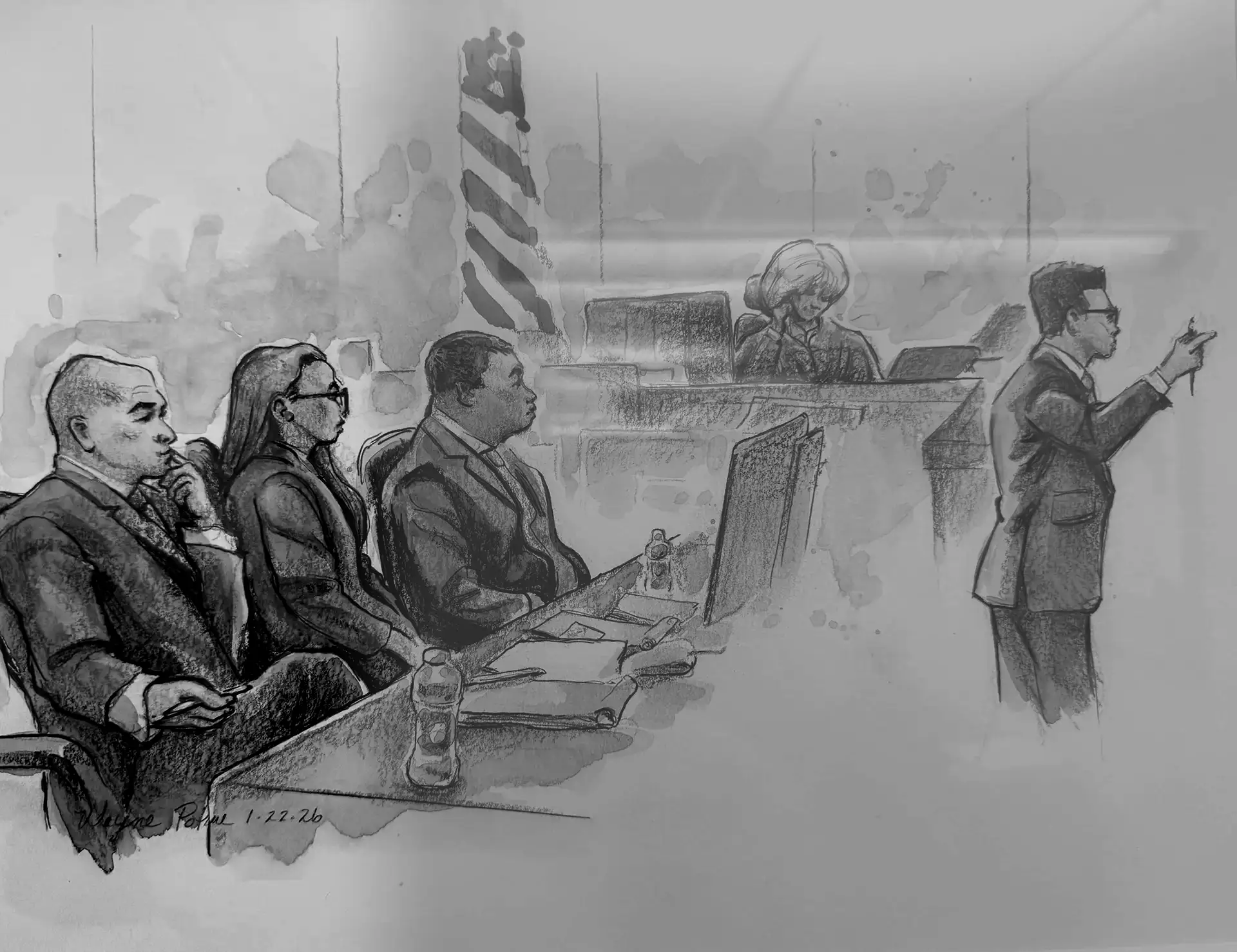
From the bench
“I’ve had experience with pretty much every criminal lawyer who works in this building and some who don’t. … [Y]ou are not going to get anybody better than these two people. And I know, because I have had experience with them in other cases, that they are going to fight like heck for you.”
From the bench, September 2024
The federal charges and what they carry
Possessing child pornography (18 U.S.C. §§ 2252 and 2252A) carries up to 10 years, or up to 20 where any image involved a prepubescent child or a child under 12; with a qualifying prior conviction, 10 to 20 years. Receiving, distributing or transporting it carries 5 to 20 years, and 15 to 40 with a prior. The same image can support a receipt count rather than a possession count, since a file knowingly downloaded was also received, and the difference is the 5-year minimum; which count the government charges is often the most important negotiation in the case, and it can happen before the charge is filed.
Producing the material (18 U.S.C. § 2251), which includes persuading or coercing a minor to engage in sexually explicit conduct for a picture or a live stream, carries 15 to 30 years, 25 to 50 with one prior and 35 years to life with two. Using the internet or a phone to persuade, induce, entice or coerce a minor into prostitution or illegal sexual activity, or attempting to (18 U.S.C. § 2422(b)), carries 10 years to life, and is the charge in most undercover chat cases, where the “minor” was an agent. Transporting a minor across state or national borders for prostitution or illegal sexual activity carries 10 years to life (18 U.S.C. § 2423(a)).
After the sentence comes supervised release of at least five years, which can run for life, and registration. Under the federal Sex Offender Registration and Notification Act, a first conviction for production, distribution or online enticement generally carries registration for 25 years, and possession or receipt 15; an earlier sex offense can lengthen the period, up to life, and state rules can be stricter.
The first weeks: the search, the interview, and detention
The search is the beginning of the case, and what the person says during it is often the government’s best evidence. Agents ask who uses each device, what the passwords are and what will be found; a person who has been searched but not arrested should speak to a lawyer before speaking to agents again, and should not delete anything. A lawyer can find out what the warrant was based on and whether the charge can be shaped before it is filed.
Once a charge is filed, the detention hearing is held at the first appearance or, if either side asks for a continuance, generally within three working days on the government’s request and five on the defense’s. For production, receipt, distribution, enticement and travel offenses involving a minor, the law presumes detention, and the defense has to offer evidence against the presumption, though the burden of proof stays with the government. For possession the government can still move for detention, but there is no presumption based on the charge alone.
What the defense examines
The government’s case rests on the forensic examination and on how the material got there, and the defense examines each step:
- The warrant: what the application said, whether the information was stale, and whether the search stayed within it
- Who used the device or the account, and whether the client knew the files were there
- Whether the files were sought or arrived unasked, and whether they were viewed, deleted or shared
- What the file-sharing software actually did, and whether “distribution” means more than a default setting
- In enticement cases, who proposed what, whether the client believed the person was a minor, and entrapment where an agent steered the conversation
This usually calls for the defense’s own forensic examiner. At sentencing the advisory guidelines add levels for the number of images, the ages of the children, the use of a computer and distribution, and often produce ranges well above the minimum; many judges sentence below them, and the defense builds the record for that with an evaluation, treatment and the person’s history. An appeal from the Northern District of Illinois goes to the Seventh Circuit.
Both partners lead the defense on every case
Jonathan Bedi and Dena Singer work on Bedi & Singer’s federal sex offense cases together. These cases are hard on families and are handled with discretion: the client is told what the evidence is, what each charge carries and what the realistic paths are, and every decision is made with the client.



Representative matters
-
Possession of child pornography, Northern District of Illinois, 2023
Bedi & Singer represented a client charged with possession of child pornography in federal court. Before charges were filed, Bedi & Singer negotiated with the government for a charge that did not require a mandatory minimum sentence. The client pled guilty and received a sentence below the guideline range.
- U.S. District Court, Northern District of Illinois
- 2023
Prior results do not guarantee a similar outcome.
Frequently asked questions
Do federal sex offenses carry mandatory minimum sentences?
Most do. Receiving or distributing child pornography carries a minimum of 5 years, producing it 15 years, and enticing a minor online or transporting a minor across state or national borders for illegal sexual activity 10 years. Possession has no minimum unless the person has a qualifying prior conviction, which makes the minimum 10 years. Unless the government moves for a reduction for substantial assistance, the court cannot go below a minimum, so the defense often turns on which offense is charged.
Will I be held in jail before trial on a federal sex offense charge?
Often, but not always. For production, receipt, distribution, enticement and travel offenses involving a minor, federal law presumes that no conditions of release are adequate; the defense answers that presumption with the person’s history, ties and a plan, and the government keeps the burden of proving that detention is needed. For a possession charge there is no presumption based on the charge alone, though the government can still ask for detention. Where release is granted on any charge except possession, federal law requires electronic monitoring and a curfew, among other conditions; on any charge the court can restrict internet use and contact with minors, and a family member may have to serve as a custodian.
Will I have to register as a sex offender after a federal conviction?
Yes. A federal conviction for any of these offenses requires registration under the Sex Offender Registration and Notification Act and under the law of the state where the person lives, works or studies. For a first offense, federal law generally sets the period at 15 years for possession and receipt, 25 years for distribution, production and online enticement, and life for the most serious contact offenses; an earlier sex offense can move a person to a longer period. The 15-year period can be cut to 10 for a person who goes ten years without a felony or a sex offense conviction and completes supervision and a certified treatment program, and time in custody does not count toward any of these periods. State rules are often stricter, and a conviction also brings at least five years of federal supervised release.
Contact Bedi & Singer
If federal agents have searched your home or taken your devices, if you have been contacted about an online investigation, or if you or someone in your family has been charged in federal court with a sex offense, contact Bedi & Singer. What is said to agents and what is done with the devices in the first days can decide the charge.