
Criminal Sexual Abuse Charges in Illinois
Defense for people accused of criminal sexual abuse and aggravated criminal sexual abuse in Cook County and across Illinois, charges that run from a misdemeanor to a Class 1 felony.
How a sex abuse case begins
A sex abuse allegation can come from anywhere a person’s life touches other people: a relationship, a workplace, a school, a family. It may arrive as a complaint to the police, a report to an employer or a school, or a petition for an order of protection. Often more than one of those starts at once, and the criminal case, if there is one, follows the others.
The charges that may follow, criminal sexual abuse and aggravated criminal sexual abuse, cover a wide range: from a Class A misdemeanor between teenagers close in age to a Class 1 felony where the accused held a position of trust over a minor. What the State can prove about the act, the ages, and the relationship decides which charge applies, and whether probation is possible.
Bedi & Singer defends people accused of sex abuse at the Leighton Criminal Court Building at 26th and California, in Cook County’s suburban courthouses, in the collar counties, and in courts across Illinois.
From the bench
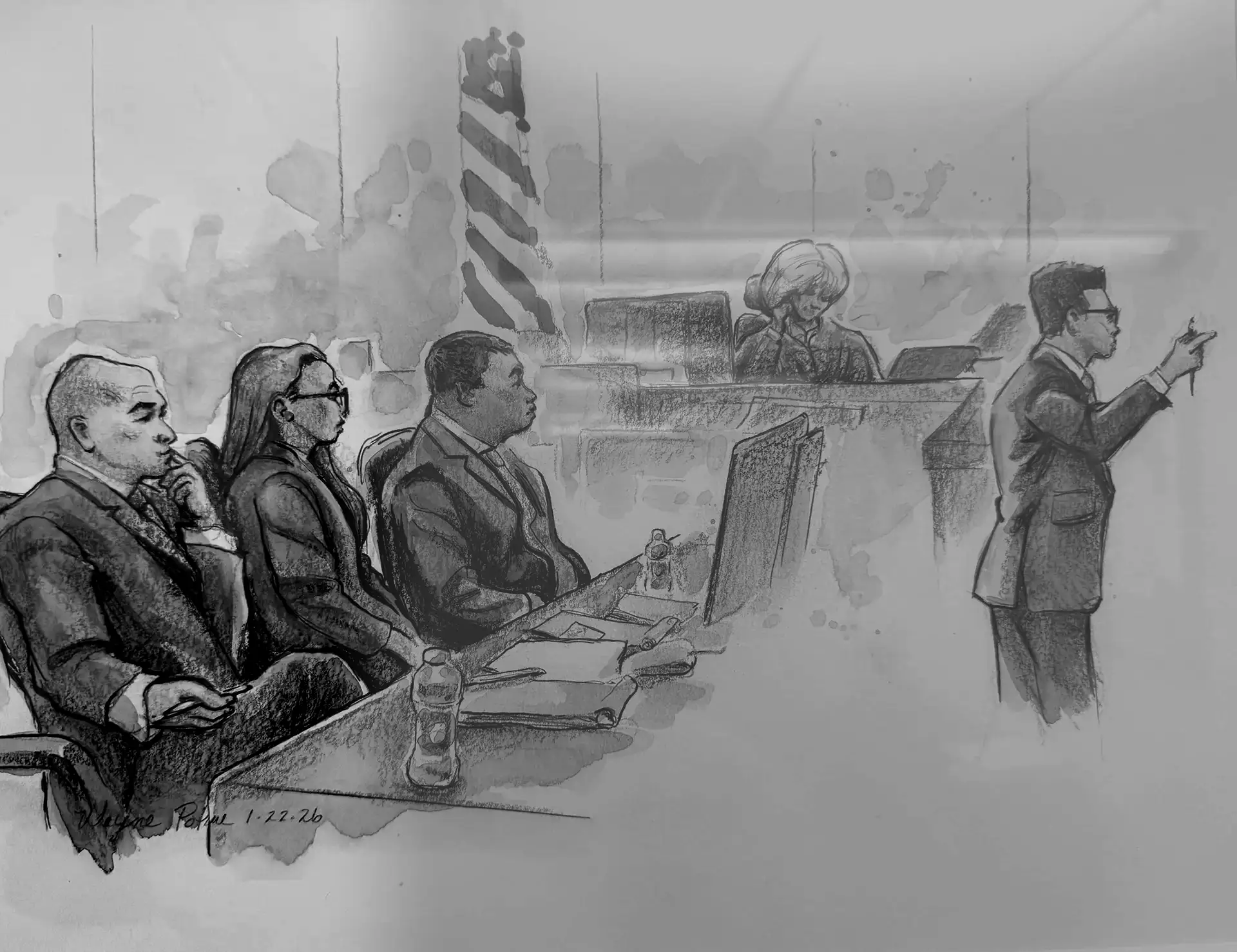
“I’ve had experience with pretty much every criminal lawyer who works in this building and some who don’t. … [Y]ou are not going to get anybody better than these two people. And I know, because I have had experience with them in other cases, that they are going to fight like heck for you.”
From the bench, September 2024
Criminal sexual abuse and aggravated criminal sexual abuse
Most forms of sexual abuse in Illinois rest on sexual conduct rather than penetration: knowing touching or fondling, directly or through clothing, of the sex organs, anus, or breast, or of any part of the body of a child under 13, for sexual gratification or arousal. The age-based forms reach penetration as well. Criminal sexual abuse is sexual conduct by force or threat of force, or with a person the accused knew could not understand the act or consent (720 ILCS 5/11-1.50). It is a Class 4 felony, 1 to 3 years, with probation available; a second conviction is a Class 2 felony.
Aggravated criminal sexual abuse is criminal sexual abuse, meaning sexual conduct by force or with a person who could not consent, with an aggravating circumstance: a weapon, bodily harm, a threat to the victim’s life, another felony in progress, a victim 60 or older or with a physical disability, or a drug given without consent. It is also sexual conduct with a person with a severe or profound intellectual disability; sexual conduct with a family member under 18; sexual conduct by a person 17 or older with a child under 13, or with a minor of 13 to 16 by force; and sexual penetration or conduct with a minor of 13 to 16 by a person at least five years older (720 ILCS 5/11-1.60). It is a Class 2 felony, 3 to 7 years, with probation possible, on conditions where the accused is a family member. Where a person 17 or older held a position of trust, authority, or supervision over a minor, it is a Class 1 felony, 4 to 15 years.
A conviction for aggravated criminal sexual abuse requires registration as a sexual predator for life; criminal sexual abuse requires registration as a sex offender for ten years, unless a prior conviction changes that. For many clients that consequence, not the sentence, is the one the defense is built around.
The allegation, the relationship, and the record
These cases turn on the relationship between two people and on what each said about it, before and after. The defense examines the messages, the accounts of the people each person told, the timing of the complaint, and whatever else was happening at the time: a breakup, a custody dispute, a workplace conflict. Where the charge depends on ages, the State must prove them; where it depends on a position of trust, the defense examines what the relationship actually was.
As in sexual assault cases, the State may ask to use other alleged sex offenses by the accused to argue that the person was more likely to have committed this one, a use generally barred in other criminal cases; keeping that evidence out is often the most important motion in the case.
Detention, orders of protection, and the proceedings outside court
Criminal sexual abuse and aggravated criminal sexual abuse are charges on which the State can petition to deny pretrial release. The hearing is held at the first appearance, or, if a continuance is granted, within 24 or 48 hours depending on the class of the charge. To hold the person as a danger to others, the State must prove by clear and convincing evidence that the case against the person is strong, that the person poses a real and present threat, and that no release conditions can address it. In most of these cases release comes with conditions, including no contact with the accuser.
The criminal case is rarely the only proceeding. A petition for an order of protection or a civil no contact order, an employer’s or a school’s investigation, and a Title IX process on a campus each run on their own schedule, with their own interviews, and a statement given in one can be used in the others. Bedi & Singer defends the criminal case with those proceedings in view and advises before any interview is given.
Both partners lead the defense on every case
Jonathan Bedi and Dena Singer work on Bedi & Singer’s sex abuse cases together. Every case is prepared as one that may be tried. Bedi & Singer has represented athletes, executives, religious leaders, and students facing misconduct allegations in internal investigations, and brings that work to the criminal case.
An allegation of this kind reaches work, family, and reputation before anything is decided. Bedi & Singer keeps the client and the people close to them informed about what is happening and why, from the first allegation on.



Representative matters
-
Sexual assault, Cook County bench trial, 2021
Bedi & Singer represented a client in a sexual assault matter. The client was found not guilty at a bench trial.
- Cook County, Illinois
- Bench trial
- 2021
-
Sexual assault resolved as felony battery, Ogle County, 2021
Bedi & Singer represented a client in a sexual assault case. The charges were reduced to felony battery, and the client pled guilty to the reduced charges.
- Ogle County, Illinois
- 2021
-
Criminal sexual assault charge resolved with probation, Cook County, 2023
Bedi & Singer represented a client charged with criminal sexual assault in Cook County. The client pleaded guilty to a lesser charge and received probation in 2023.
-
Aggravated criminal sexual abuse charge against a pastor, Illinois, 2025
Bedi & Singer represented a pastor charged with aggravated criminal sexual abuse in Illinois state court. The client pleaded guilty to a lesser charge and received probation in 2025.
Prior results do not guarantee a similar outcome.
Frequently asked questions
What is the difference between criminal sexual abuse and criminal sexual assault in Illinois?
The act. Sexual assault is sexual penetration; sexual abuse is sexual conduct, meaning touching or fondling for sexual gratification, except in the age-based forms, which reach penetration too. The circumstances that make each one a crime overlap: force or threat of force, a person who could not consent, and family and position-of-trust relationships; the teenage age-gap forms exist only in the abuse statutes. Criminal sexual assault is a Class 1 felony with no probation; criminal sexual abuse by force or with a person who could not consent is a Class 4 felony with probation available, and the teenage forms are Class A misdemeanors.
Can I be charged if we were both teenagers?
Yes. Without force or another aggravating circumstance, sexual conduct or penetration between a person under 17 and another of 9 to 16 is criminal sexual abuse, a Class A misdemeanor, and so is conduct with a person 13 to 16 by someone less than five years older. Where the older person is five or more years older, the charge is aggravated criminal sexual abuse, a Class 2 felony. For the misdemeanor charges and the five-years-older felony, a reasonable belief that the other person was 17 or older is a defense. Even the misdemeanor forms require registration as a sex offender.
What if the person who accused me has also filed for an order of protection?
The order of protection case is a civil proceeding with its own hearing, often within weeks, and it goes ahead whether or not criminal charges are filed. What the person says at that hearing, under oath or not, can be used in the criminal case, so the two have to be handled together: whether to testify, what to agree to, and how the order’s terms affect home, children, and work.
Contact Bedi & Singer
If you or someone in your family has been accused of sexual abuse, contacted by police or an employer about an allegation, or served with a petition for an order of protection, contact Bedi & Singer before giving any statement. The first account on the record is the one every proceeding will use.